

New Construction Siding in BC: A Builder's Guide to the Cladding Package
How GCs, developers and custom-home builders should run the siding scope in BC: early engagement, submittals and lead times, sequencing with other trades, QA that prevents deficiencies, and closeout.
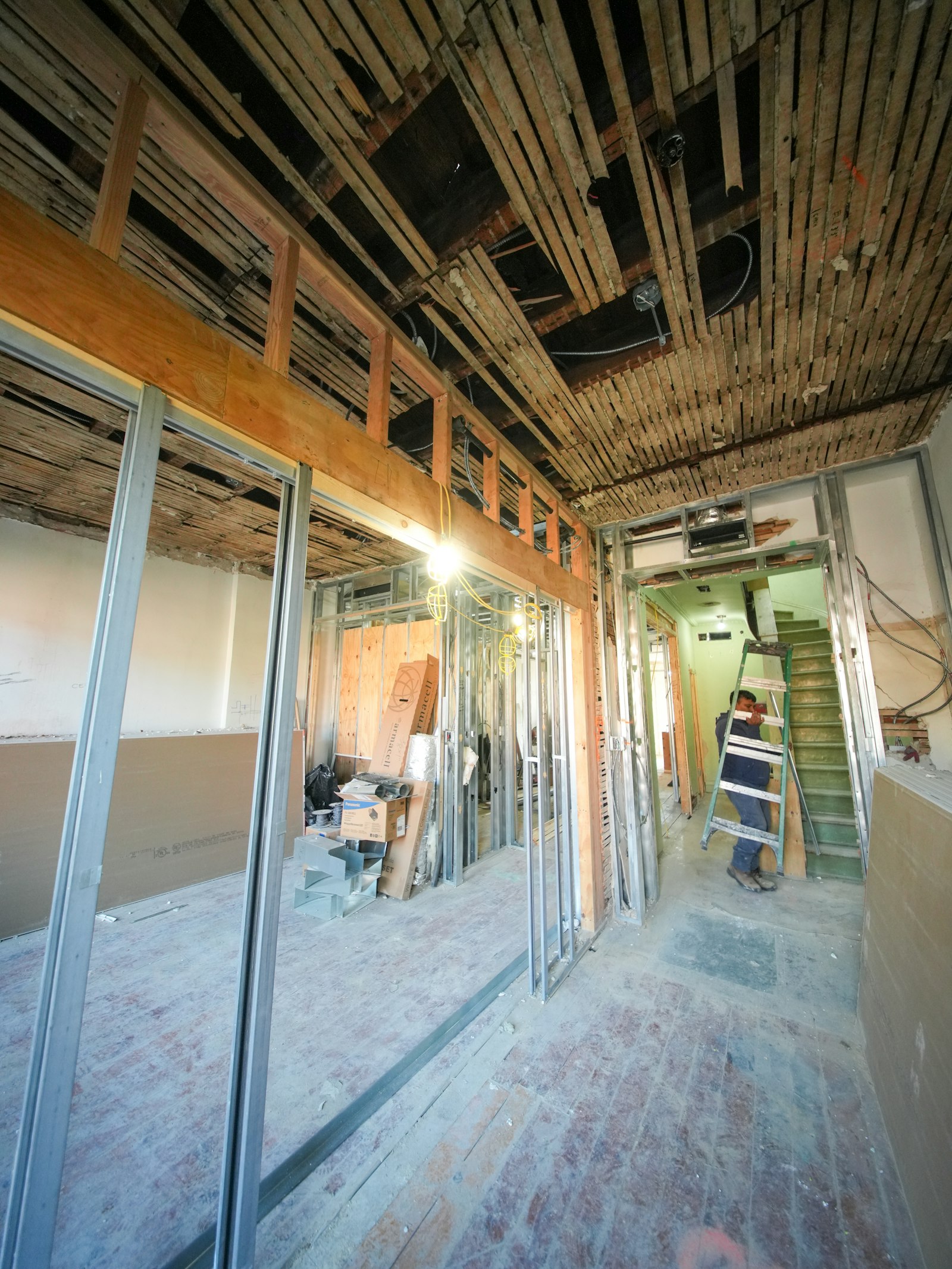
Most of this series speaks to homeowners; this guide speaks to the people who build for them. The cladding package on a new build, single custom home or wood-frame multi-family, is a scope with outsized exposure: it closes the envelope, it carries the architecture's face, it sits on the critical path's weather-sensitive stretch, and its failures surface as the most visible deficiencies a project can generate. Having delivered that package across the region as the exterior sub, here is how the builds that go well actually run it, part of our siding guide for BC buildings.
Engage the cladding trade before the drawings freeze
The cheapest cladding problems to fix are the ones caught as lines on paper, and catching them requires the trade at the table early, design development ideally, permit set at latest. What early engagement actually delivers, from our side of it: rainscreen and insulation depths reviewed against window bucks and door details before the dimension games begin, the Step Code assemblies that keep surprising teams who detailed for last decade's walls; transition details, cladding to cladding, wall to roof, wall to soffit, resolved by the trades who will build them, per the junction discipline this climate enforces; material realities fed into the spec while alternatives are free, availability, lead times, the premium-profile budget logic applied to elevations that matter; and pricing built from details rather than allowances, the difference between a numbers-hold bid and a claims-generator, per the quote transparency that serves builders even harder than homeowners.
The engagement costs a meeting. The alternative costs RFIs, and RFIs on the critical path cost the schedule.
Submittals, lead times and the procurement clock
The cladding package's procurement runs longer than teams expect, and the clock starts at approval, not at need. Factory-finished products, ColorPlus lines, woodgrain metals, Longboard-class systems, carry real lead times, made-to-order at the batch level, and the single-batch discipline matters at project scale: colour consistency across a multi-building site wants coordinated ordering, with attic stock for the future-matching file. Submittal cycles, product data, samples, mockup approvals where specified, belong at the schedule's front, and the site mockup deserves its budget line on any project with reveal-critical or premium-panel systems: the wall that gets argued about at mockup stage is the argument the building never has to wear.
Our standing counsel to GCs on procurement: lock the cladding order at envelope-rough stage, and let the schedule's inevitable drift happen against a delivered package rather than a pending one. Material waiting on site beats crews waiting on material by every measure a project tracks.
Sequencing: the envelope handshake
Cladding quality is substantially decided before cladding starts, in the handshake between trades at the envelope. The sequence that works, and the one we write into our own scopes: substrate delivered flat, dry and fastened to spec, with responsibility named, not assumed; windows and doors installed and integrated; WRB complete, lapped correctly, and reviewed, our foreman walks it before strapping, per the assembly-first discipline, because burying someone else's deficiency converts it into ours; flashings sequenced with the membrane, not caulked over it afterward, the failure catalogue's most preventable chapter; then strapping, insulation where scoped, and cladding in course.
The scheduling corollaries: hold access, scaffold, swing stage, lifts, until the trade's punch is actually complete, early access pulls generate the remobilizations that quietly eat cladding budgets; stack the finishing trades so penetration-owners, electrical, mechanical, lighting, land their exterior work before final cladding closes each elevation; and give the cladding window honest weather buffers rather than fantasy durations, since tarped professionalism manages coastal weather but does not delete it.
QA that prevents deficiencies instead of finding them
Cladding deficiencies are expensive precisely because they surface late, at walkthrough, at occupancy, at year two, so the QA that matters is the kind that runs during, not after. What we bring as standard and recommend builders demand from any envelope sub: stage photography of everything that gets covered, membrane, flashings, fastening patterns, cavity work, the record that answers year-five questions in minutes; foreman checkpoints at the transitions, substrate acceptance, WRB review, first-course alignment, per-elevation completion, because installation culture is uniform and checkpoints keep it visible; manufacturer-spec fastening and clearances treated as hold points rather than intentions, warranty compliance being a deliverable the closeout package must actually contain; and a live deficiency log per elevation, closed as built, so the punch walk confirms rather than discovers. On consultant-reviewed projects, multi-family and Step Code work especially, this discipline is simply the price of clean field reviews; on projects without consultants, it is the builder's substitute for one.
Closeout as a product
The cladding package ends properly when its paper serves the building's future, and builders are judged on this longer than on the schedule. The closeout we deliver, and the standard worth specifying: warranty documentation assembled, manufacturer terms registered where applicable, workmanship terms in writing; maintenance guidance in owner language, wash cycles, sealant horizons, the lifespan-preserving habits; product records and attic stock logged for future repairs, the file that makes a strata's depreciation report baseline accurate and a decade-later repair matchable; and the concealed-stage photo set, delivered, not archived in a sub's phone. For multi-family, that package feeds directly into the corporation's records at turnover; for custom homes, it is the owner's manual their future assessments will thank the builder for. Cheap to produce during, impossible to reconstruct after, and a differentiator with buyers who have learned, in this region especially, to ask what is behind the wall.
The multi-family rhythm: what changes at scale
Single-custom and multi-family cladding share physics and diverge in rhythm, and builders moving between them should know which habits transfer. At multi-family scale, elevation-cycle planning becomes the schedule's skeleton: crews progress building faces in a rotation that trails the envelope trades by a stable interval, and the phased logic stratas know from restoration applies in construction form, with occupancy phasing sometimes overlapping the exterior's tail. Consistency management scales into a discipline of its own: batch-coordinated materials, documented layout standards so building three's crew resolves details identically to building one's, and mockup decisions promoted into written standards rather than remembered agreements. The consultant layer thickens, field reviews at defined stages, per the QA rhythm, and letters that lenders and warranty providers expect, which rewards subs who produce reviewable work and reviewable paper on the same schedule. And deficiency economics multiply: a detail error repeated across forty units is a program, not a punch item, which is why the first-elevation review deserves disproportionate attention, catch it once, prevent it forty times. The transfer in the other direction is worth naming too: custom-home builders who adopt multi-family's documentation and checkpoint habits deliver the region's best single houses, since the disciplines cost little at small scale and prevent the same expensive week.
Working with us, or anyone, as the exterior sub
A closing section builders can use as a sub-evaluation template, whoever they hire. The exterior sub worth long-term relationships shows a stable pattern at bid stage: prices from your details rather than around them, flags drawing conflicts before contract rather than as extras after, and states lead times, crew capacity and schedule assumptions in writing, per the transparency standards that predict field behaviour. In the field: a named foreman as your single point of contact, the checkpoint-and-photo discipline above as default rather than negotiated extra, daily sites left clean and weatherproof, and change management that documents before it invoices. At closeout: the full package delivered unprompted, punch lists closed rather than argued, and warranty response in the years after that treats your buildings as references rather than history. We built our new-construction practice on exactly that pattern because repeat GC relationships are the entire business model, a sub who burns a builder trades one project for a pipeline, and the incentive alignment runs both ways: builders who deliver ready substrates, honest schedules and prompt draws get their projects prioritized in every capacity crunch. The best exterior packages in the region are partnerships wearing subcontract clothes, and both signatures know it.
Questions GCs ask us at bid stage
"Can you hold this price if the schedule slips two months?" Material pricing and crew availability both move, so honest answers name the mechanism: how long the number holds, what triggers revisit, and how the material order protects both parties. Vague reassurance at bid becomes a claim later, per the transparency logic that serves builders hardest.
"Who owns the substrate readiness?" Whoever the contract says, and it should say. Flatness tolerances, moisture condition, fastening standards and the acceptance walk belong in writing, because unowned readiness becomes the cladding sub's problem at exactly the wrong moment.
"Will your crew work around our other trades?" Coordination is normal; repeated remobilization is a cost. Good answers describe sequencing preferences, notice requirements and how return visits are priced, which lets the GC schedule intelligently rather than discover the surcharge.
"What happens if the consultant rejects something?" The healthy answer is a process, not a defence: correct promptly, document the correction, and treat field reviews as quality infrastructure. Subs who argue with reviewers cost builders time; subs who fix and photograph cost nothing.
The cost of getting the cladding package wrong
Builders weigh subcontractor decisions in risk as much as price, so the failure modes deserve explicit accounting. Schedule risk: a cladding crew that cannot hold its window pushes every following trade, and on multi-family, occupancy dates carry financing consequences that dwarf any bid spread. Deficiency risk: envelope errors discovered at walkthrough are expensive; discovered at year two through a warranty claim, they are expensive plus reputational; discovered at year five as envelope water penetration, they engage BC's statutory new-home warranty tier and the builder's insurer. Coordination risk: subs who cannot sequence with the envelope trades generate the buried-deficiency scenario that this guide's handshake section exists to prevent. And documentation risk, the quiet one: a sub who cannot produce concealed-stage evidence leaves the builder defending workmanship without proof, years later, against a claim whose facts nobody can reconstruct.
Against those exposures, bid spread between competent subs is usually the smallest number in the decision. Which is the same conclusion homeowners reach through the quote comparison method, arrived at from the other side of the contract: on envelope work, buying the practice rather than the price is not sentiment, it is risk management with arithmetic behind it.
The builder's checklist
Engage the cladding trade at drawings. Order against approval dates, not need dates. Define substrate readiness in writing. Sequence the envelope handshake and hold access to punch-complete. Run QA during, with photos and checkpoints. Deliver closeout as a scope item. Six lines, and the projects that follow them produce the envelopes nobody hears about again, which on exterior work is the definition of success.
Key takeaways
- Engage the cladding trade at drawings, not framing: details reviewed on paper cost meetings; the same details as RFIs cost the critical path.
- Run procurement off approval dates: factory finishes and premium systems carry lead times that only hurt when discovered late, and single-batch ordering protects multi-building colour.
- Cladding quality is decided at the envelope handshake: substrate acceptance, reviewed WRB, sequenced flashings, and access held until punch-complete.
- QA during beats QA after: stage photos, foreman checkpoints and per-elevation logs prevent the deficiencies walkthroughs would otherwise find.
- Closeout is a product: warranties, maintenance guidance, product records and concealed-stage photos, delivered as the package's final scope item.
Building in the region and want the cladding package to run like this? Book a conversation or call 778-358-2885, we bid from details, sequence with your schedule, and deliver the paper with the wall.
One closing thought for builders weighing all of this: the exterior is the part of your project the market judges first and the warranty period judges longest. Getting the cladding package right costs a few coordination meetings and a slightly higher subcontract; getting it wrong costs schedule, deficiency budgets, warranty exposure and the referrals that quiet buildings generate. The arithmetic has never been close.