

Siding Repair in Vancouver and the Lower Mainland
Mega Siding Exterior repairs siding, soffit and fascia across Vancouver, the North Shore, Burnaby, Richmond, the Tri-Cities and the Fraser Valley. Same crews and the same wall detailing we use on full re-clads, scoped down to the section that actually needs work.
What we repair.
Not every wall needs a full re-clad. A cracked panel, a rotted fascia board, a leaking window head or a woodpecker hole is a repair, and treating it as one saves you a great deal of money. What matters is knowing which is which. We open the wall, show you what is actually behind the cladding, and give you a straight answer on whether a repair will hold or whether the damage has gone past the point where patching is honest.
- Vinyl, wood, cedar, aluminum and fiber cement panel repair
- Soffit and fascia repair and replacement
- Rot and water damage repair behind the cladding
- Storm, impact and insurance-claim repairs
- Discontinued profile and colour matching
- Flashing and window detail corrections
Project types we deliver.
Homeowner Repairs
Damaged panels, rotted fascia and leaks at windows and trim.
Strata & Townhomes
Targeted repairs on common property ahead of a full restoration.
Rental & Investment Property
Fast, contained fixes that keep a building tenantable.
Insurance & Storm Work
Documented scope and photos for claim submission.
From first look to final walkthrough.
Free on-site assessment
We look at the damaged area and the walls around it, because visible damage is often the smallest part of the problem.
Repair or replace, in writing
You get a straight recommendation. If a repair will hold, we scope the repair. If it will not, we tell you why rather than selling you a patch.
Open the wall and show you
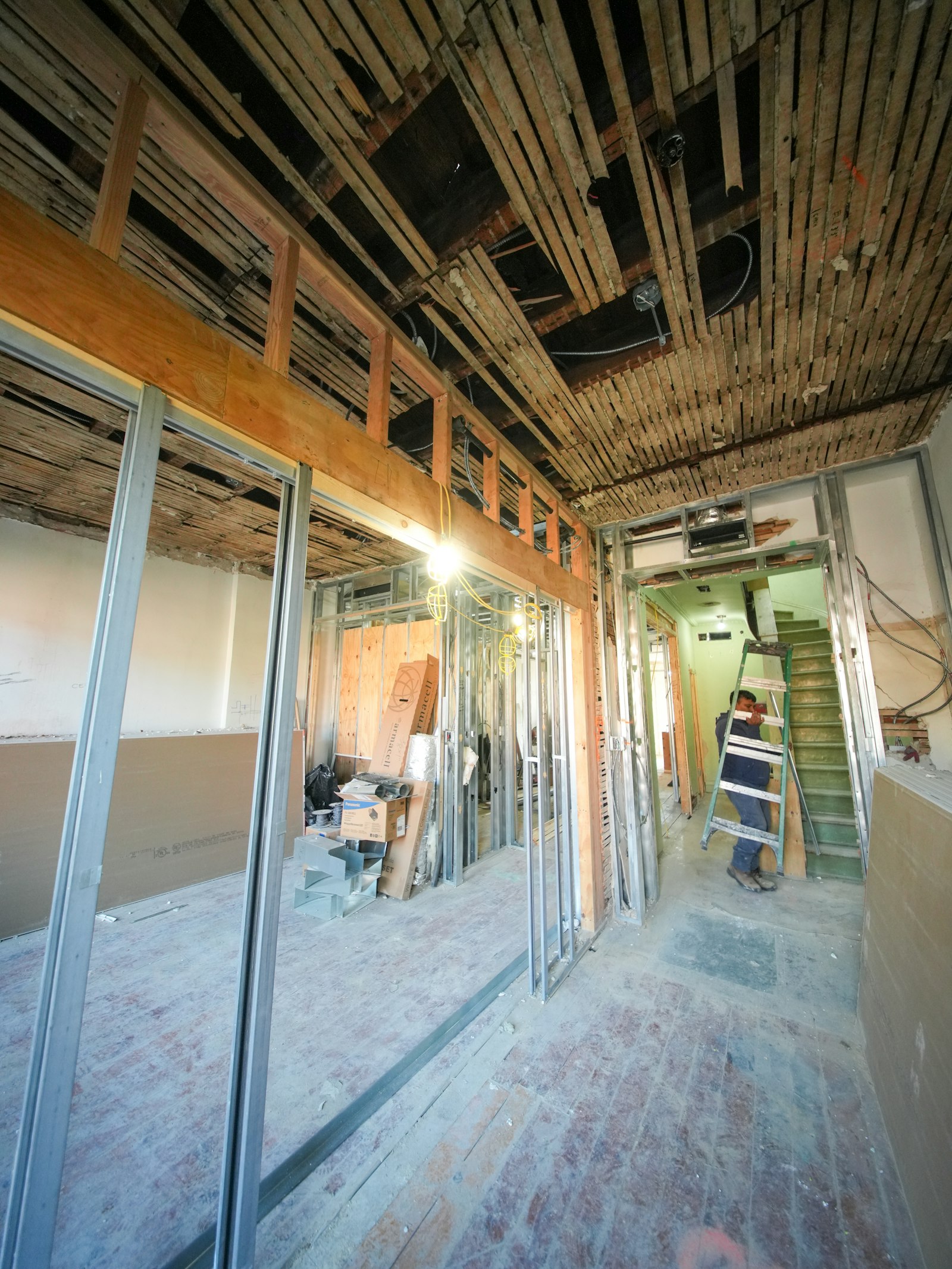
Cladding comes off the affected section, and we photograph the sheathing, framing and barrier before anything is closed up.
Repair the substrate first
Rot, wet sheathing and failed flashings are corrected before new cladding goes back on. Covering them up is how repairs come back.
Match, install and clean up
Profile and colour matched as closely as the product allows, then full cleanup and a walkthrough with you.
Siding repair, explained.
Most siding repair calls are water problems first.
Across the Lower Mainland, the thing that damages siding is rarely the siding. Between October and April a wall here can stay wet for weeks, and coastal wind drives that rain into joints that were never meant to see water sideways. The cracked board or soft corner you can see is the receipt. The water path that produced it is the problem.
That changes how we scope a repair. Before anything comes off, our foreman asks where water is getting in and where it is going. The stain on the siding is often well below the entry point: a failed window head flashing, a plugged gutter or a missing kickout dumping a roof's worth of water onto one strip of wall. A repair that swaps the board and leaves the water path alone is a repair you pay for twice.
It also means we open past the visible damage, because rot hides under paint that still looks fine. On the 1970s to 1990s housing stock in Burnaby and the Tri-Cities, and on older East Van homes built before the rainscreen era, the building paper behind the cladding was often never going to drain, so a moisture symptom there earns a look at the sheathing.
Repair by material: vinyl, cedar and wood, aluminum, fiber cement.
Vinyl cracks on cold impact days and lets go in wind, and the cause is nearly always the same: it was nailed too tight and could not move. A cracked panel is replaced, never glued. A zip tool unlocks the course above, the new panel locks in with play, and we refasten the surrounding courses through the slot centres, because one new panel on a tight-nailed wall just tees up the next one for the next storm.
Cedar and wood rot where water lingers: bottom courses, unsealed board ends, behind the hydrangea, and on shaded North Shore walls that dry slowly under canopy. Wood is also the most repairable cladding there is. Boards can be milled and shingles woven to match almost any profile. We cut back to sound wood, seal the end grain, and meter the wall before closing it.
Aluminum does not rot. Its failures are dents, chalking and a colour coat worn to bare metal. Residential profiles left the market a generation ago, so replacement lengths come from salvage or from a hidden elevation of your own house, and straight, tight aluminum is often best served by a disciplined repaint.
Fiber cement almost never fails on its own. When we are called to damaged Hardie, the cause is the install: nails driven wrong, clearances missing, butt joints tight with no gap. The fix is correcting those details, not just swapping the board. Its core profiles and colours have stayed unusually stable for decades, so a later repair is usually simple.
What moves the price of a repair.
We do not publish repair prices because every wall is different, but the structure of the number is stable. Access comes first. A ground-floor panel is a different job from a gable end on a North Shore slope that needs staging.
Material and availability come next. A stock vinyl colour is a quick swap. A discontinued profile means a hunt through surviving stock and the salvage market, and custom-milled cedar carries a setup cost, so it pays to bundle every board you know about into one visit. Finish work follows the same logic: a spot blend is small, a repaint of the whole elevation to erase a mismatch is not.
Then the trim and flashing. The board you called about is often fed by a rotated head flashing, a flattened kickout or a caulk joint that gave up. Those get their own small lines on the quote, so you can see what the repair actually fixed.
The biggest variable is what the opening reveals, and it is the one we cannot price from the driveway. The scope can grow from one board to one elevation, which is why the quote is built from what we measured on your wall, not from a phone description.
Strata, rental and insurance repairs.
On a strata, repair-or-restore is a governance decision as much as a technical one, and we write the assessment so council can act on it. Where a townhome complex has aluminum that is straight and tight, the practical middle road is to refasten and repaint now while council plans recladding as a scheduled project rather than an emergency. Vinyl on the same complex gets refastened, and painting it is a narrower conversation: vinyl-safe product, lighter shades only. Where the envelope predates modern practice and leaks keep recurring, a depreciation report or envelope consultant will usually point at the assembly, and so will we, instead of quoting a patch.
A rental fourplex with tight-nailed vinyl loses panels every winter until the whole wall is refastened once, properly. Do it in September, before the wind arrives. We run that preventive pass for Lower Mainland rental portfolios each fall.
Insurance repairs run on a different clock. Sudden damage from wind, hail or a falling branch is commonly covered. Rot, fade and wear usually are not, and adjusters know the difference. Photograph everything before touching anything, tarp what is open, keep the blown-off panels because they prove your product, and keep receipts. A storm scope has to catch what the driveway view misses: cracked-but-attached panels, lifted head flashings, displaced fascia and the far elevation that took secondary strikes. We establish scope and cost. We never promise what an insurer will pay.
When a repair is the wrong answer.
The rule we give clients: repair when the problem is on the wall, replace when the problem is in the wall. The hard part is reading which one you have.
The signals are consistent across materials. The same symptom on two or more elevations means the cause is shared, and you cannot patch your way out of a shared cause. A third call about the same wall in a few years is the wall telling you the patches are treatment, not cure. An unmatchable product on the front of the house turns every repair into a visible quilt.
The signal that overrides the rest is moisture behind the cladding: soft boards, staining that returns after cleaning, a musty room, or one window that weeps every winter. On a pre-rainscreen home in Burnaby or the Tri-Cities, that is no longer a siding question. The middle paths then beat another patch: replace the weather wall and repair the rest, replace the bottom courses and fix the clearances, or phase by elevation over two or three years, always breaking at corners. You get the verdict with photos, and a wall that can wait gets told to wait.
Read before you call.
Siding Repair in BC: The Complete Homeowner's Guide
The hub for the whole repair series: warning signs, the repair-or-replace framework, what happens when the wall is opened, and how neighbourhood and season change what fails.
Repair or Replace Your Siding? A BC Decision Framework
The five questions that decide repair versus replacement, the middle paths most people forget, and the mistakes that waste the most money.
Wood Siding Rot Repair in BC: Finding It, Fixing It, Stopping It Coming Back
Where rot starts on a coastal home, the six steps of a proper rot repair, and the routine that stops it coming back.
Vinyl Siding Repair in BC: Cracks, Loose Panels, Fading and When to Stop Patching
Why vinyl cracks and blows off, how a panel swap is done properly, the colour-match problem, and the point where patching stops making sense.
Aluminum Siding Repair in BC: Dents, Chalking, Paint and the Replacement Question
Dents, chalking and worn colour coats, where replacement panels come from, and the repaint that gives aluminum a second life.
Cedar Siding Repair in North Vancouver and the Wet Coast: Restore or Replace?
Reading a cedar wall by eye and thumb, restoration versus board-by-board repair, and the three honest replacement tiers for cedar loyalists.
Matching Discontinued Siding: A BC Repair Detective's Guide
How to identify what is on your walls, the four supply routes for extinct profiles, placement tricks for faded walls, and when to stop hunting.
Siding Storm Damage and Insurance Claims in BC: A Homeowner's Playbook
The first 48 hours after wind or hail, what insurance does and does not cover on siding, the matching problem in claims, and how to document a scope that settles fairly.
Siding repair across Vancouver and the Lower Mainland.
Repair calls cluster where the housing stock is oldest and the exposure is worst. These are the cities where we do the most siding, soffit and fascia repair work.
Siding Repair in Vancouver
Panel and trim repair on character homes and older East Van housing, plus fascia and soffit work on rental properties.
Siding Repair in North Vancouver
Cedar and wood siding repair on North Shore homes where rain exposure and shade keep walls wet longer.
Siding Repair in Burnaby
Vinyl and aluminum panel repair on postwar homes and duplexes, usually at windows, corners and grade transitions.
Siding Repair in Richmond
Repairs where wind-driven coastal rain has worked into unflashed joints, with the wall opened to check the sheathing.
Siding Repair in Coquitlam
Our home base. Same-week assessment on repair calls across the Tri-Cities.
Siding Repair in West Vancouver
Fascia, soffit and cedar repair on exposed hillside and waterfront homes.
Siding Repair in New Westminster
Localized repair on heritage and early-century homes where matching the existing profile matters.
Siding Repair in Surrey
Storm and impact repair on family homes and rental properties, scoped and photographed for insurance.
Built across British Columbia.
Common questions, Siding Repair.
Need a repair looked at?
Tell us what you are seeing and send a photo if you have one. We will respond within one business day to book a free on-site assessment, and you get a written line-itemed quote for the repair.


BBB accredited, licensed and insured in BC, and WorkSafeBC compliant on every project.