Strata Siding Repair in BC: Who Pays, Who Decides, and How It Actually Gets Done
How siding repair works in BC stratas: common property versus owner responsibility, how councils decide and fund envelope work, depreciation reports, and the path from complaint to completed repair.
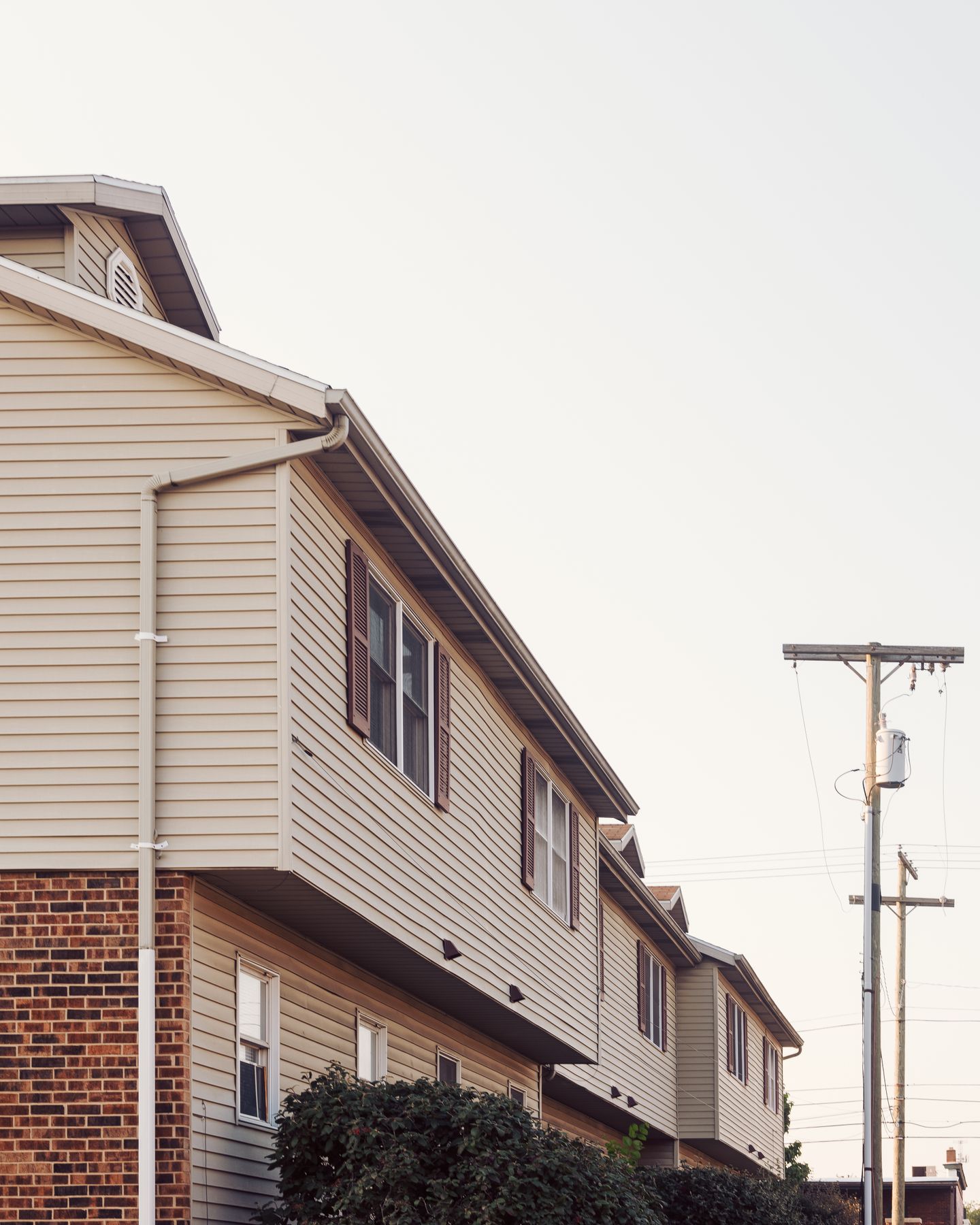
Half the Lower Mainland lives under strata title, and when siding fails on a strata building the simple homeowner question, fix it or not, becomes three questions braided together: whose property is it, whose money fixes it, and whose signature moves the work forward. Confusion between those threads is why strata siding problems so often age past their cheap window. This guide untangles them, from the perspective of a crew that works both sides, owner calls and council contracts, as part of our siding repair series. The standing disclaimer: strata law and your bylaws govern; this is practical orientation, not legal advice, and the province's strata-housing resources at www2.gov.bc.ca sit alongside your property manager as the authoritative sources.
The property question: whose wall is it
BC strata title splits every complex into strata lots, what owners own, and common property, what everyone owns together, and in typical building-form stratas the envelope is squarely common: exterior walls, cladding, the assembly beneath, windows and roofline elements per the plan. The practical consequence surprises new owners: the siding outside your kitchen is not yours, you cannot repair it yourself, choose its colour, or mount things to it freely, and its problems are the corporation's to fix, on the corporation's schedule, with everyone's money.
The variations matter though. Townhouse and bare-land stratas sometimes assign exterior maintenance differently, limited common property designations complicate decks and attached elements, and bylaws amend defaults. The first move in any strata siding question is therefore always the same: read the strata plan and bylaws, or ask the property manager to point at the clause. Every subsequent step inherits its authority from that answer.
The money question: how envelope work gets funded
Strata envelope money flows through three channels, and knowing which one your repair belongs to predicts its speed. Operating funds handle the small and recurring: a wind-lost panel, a woodpecker hole, localized flashing repair, council can typically authorize these within its spending limits, and they should move quickly. Contingency reserve funds (CRF) hold the accumulated savings for renewal and bigger repairs, fed by fees and guided by the depreciation report; elevation-scale repairs and planned recladding draw here, with owner approval thresholds by expenditure type. Special levies cover what reserves cannot: the unplanned restoration, the rot discovered systemic, voted by owners and assessed by unit entitlement, the channel every strata hopes to avoid and underfunded ones meet.
The depreciation report is the document connecting them: professional condition assessment, remaining-life projections and funding scenarios for every envelope component. Stratas that treat it as a planning tool replace siding as a scheduled CRF project at end of honest lifespan; stratas that shelve it meet the same wall as a levy emergency with a deteriorating envelope setting the timeline. Owners reading this before buying into a complex: the depreciation report and CRF balance are the envelope's biography and prognosis, and they are disclosable, read them.
The decision question: from complaint to contract
The path a siding problem travels in a functioning strata, with the friction points marked. It starts with written reports: an owner documents damage, photos, dates, location, to council or property manager, creating the record. It moves through triage: manager or council decides operating-fund repair versus investigation, and here is friction point one, envelope symptoms that look small, staining, one soft spot, may be system announcements, and the cheap response is a professional assessment, not a cosmetic patch that buries the evidence. Larger scopes bring the consultant: envelope professionals who investigate, scope, tender and review, the structure that keeps big projects honest, our restoration work runs under exactly this arrangement routinely. Then procurement and approval: quotes solicited, compared, per the normalization method, which serves councils even better than homeowners since councils must defend their choices, funding channel confirmed, owner votes where thresholds require. Finally execution and records: phased work on occupied buildings, communication to residents, and closeout documentation into the strata's permanent records, feeding the next depreciation report and every future repair-matching question.
Owners can help the path most by respecting its structure: report in writing, escalate politely through the annual meeting when responses stall, and resist the freelance repair, friction point two, because owner-hired work on common property muddles liability, warranty and insurance in ways that cost more than the patience would have.
The chargeback carve-outs
The everyone-pays default has edges. Owner-caused damage, the trellis screwed through the cladding, the pressure-washer enthusiasm, the barbecue against the wall, can be charged back to the responsible owner per bylaws, which is one reason alteration rules exist and approvals matter: the approved satellite mount with proper flashing is the strata's detail; the unapproved one is your invoice waiting. Alteration agreements formalize this, owners taking responsibility for their additions' consequences, and buyers inheriting altered units should ask what agreements travel with them. Insurance adds its own layer: corporation policies, deductibles that can be significant, and allocation rules for whose deductible a loss triggers, storm damage on stratas runs through this machinery, and the documentation habits that guide covers matter doubly where a council must reconstruct events for adjusters and owners alike.
Why strata siding decisions age badly, and the fix
The structural honesty this guide owes: stratas defer envelope work more than homeowners do, not from negligence but from design, shared money moves slower than private money, volunteer councils rotate, and a levy vote is a harder conversation than a household budget. The compounding problem is that envelope deterioration does not wait for governance cycles: the staining reported in one council's minutes becomes the next council's investigation and the third's levy. The fix is boring and proven: treat the depreciation report as live planning, fund the CRF like the envelope depends on it, respond to written reports with assessments rather than patches, and build the relationship with envelope professionals before the emergency, the same act-early economics that governs every wall, scaled to a building and slowed by democracy, which is exactly why starting earlier matters more, not less.
A repair's journey: composite from the files
The abstractions made concrete. A Burnaby townhome complex, forty units, vinyl-clad since the late nineties: an owner reports staining below her kitchen window in an October email with photos, the written record that starts everything. The manager logs it; council's November meeting approves an assessment rather than a patch, the fork most stories get wrong, and the assessment finds the staining systemic across weather-facing elevations, tight-nailed panels aging out, with localized membrane concerns at a dozen windows. The depreciation report, two years old, had projected cladding renewal within the decade; council accelerates it, engages an envelope consultant over winter, and the spring AGM approves a CRF-plus-modest-levy funding package with the consultant's scope in hand, three-quarters owner approval, carried on the strength of documented evidence rather than council persuasion. Tendering runs the normalization method at strata scale; the phased re-clad executes across two summers, elevation by elevation, residents informed weekly; and closeout lands the warranty package, product records and stage photography into corporate records, resetting the next depreciation report's baseline. Elapsed time from email to completion: twenty months, fast, for governance, and every month of it purchased by that first written report and the assess-first fork. The counter-story, the patched version, ends four years later in a levy twice the size; we have crewed both endings, and the difference was never the wall.
For owners buying into stratas: the ten-minute envelope read
Since this guide's readers include buyers mid-diligence, the compressed version of what the documents reveal. Pull the depreciation report and read the envelope sections: cladding age against honest lifespan, projected renewal dates and costs, and whether the funding scenarios show a CRF actually accumulating toward them. Scan two years of council minutes for the envelope's vocabulary, leaks, staining, investigations, deferred quotes, patterns of reports aging without assessments being the tell. Check the CRF balance against the report's projections, not against your intuition, six figures reads impressive until the projection reads seven. Note the insurance deductibles, water especially, and any recent envelope claims. And walk the complex with this series' eyes: bottom-course condition, staining patterns, patch archaeology, the visible version of the paperwork's story. None of this requires expertise, only the willingness to read, and it prices the difference between a complex that maintains its envelope and one that will be voting on yours, with your equity, on an emergency timeline.
Questions owners and councils ask
"Can I paint or repair my own unit's exterior?" On common property, no, and the instinct causes real problems: unauthorized work muddles liability and warranty, and colour deviations become bylaw matters. Report it, escalate it, but do not fix it yourself.
"Council keeps deferring. What are my options?" Escalate through the documented channels: written follow-ups, agenda items at general meetings, and the depreciation report as evidence rather than opinion. Owners collectively hold the votes; the record is what persuades them.
"Who pays if my unit's interior is damaged by the leak?" It depends on cause, coverage and bylaws, corporation policy, owner policy, and deductible allocation rules all engage, which is why prompt written reporting and photo documentation protect owners specifically.
"Is a special levy avoidable?" Sometimes, through disciplined reserve funding against depreciation-report projections, which is the entire argument for treating that report as a plan. Levies are what deferral eventually costs, distributed.
Making the case to a reluctant council
Owners who see a problem and meet inertia need persuasion tools rather than frustration, and a few work reliably. Lead with the document, not the opinion: the depreciation report's own projections for the envelope carry more weight in a meeting than any owner's concern, and quoting it reframes the request as following the plan rather than adding to it. Bring evidence, not adjectives: dated photos, a written chronology of reports, and where warranted, an independent assessment whose findings are technical rather than personal. Frame it in the council's language, which is money and risk: deferral arithmetic, small repair now versus levy later, and the insurance and disclosure implications of documented unaddressed envelope issues.
Then use the governance machinery rather than fighting it: agenda items rather than hallway conversations, formal requests that generate minuted responses, and, where genuinely necessary, the general meeting where owners collectively hold the votes that councils execute. The dispute pathways exist for the rare cases that need them, but the overwhelming majority of strata envelope stalemates resolve when one owner assembles the documentation that lets a council act with confidence rather than argue with uncertainty.
For councils reading this
The single highest-value habit available to a strata council on envelope matters: respond to written reports with assessments rather than patches, and fund the reserve against the depreciation report's actual projections. Those two disciplines convert envelope work from a recurring crisis into a scheduled expense, and every complex in this region that has aged gracefully did so because some council, years earlier, chose them. It is unglamorous governance, and it is the whole difference.
Key takeaways
- Siding is typically common property: the corporation maintains it, everyone funds it, and your bylaws hold the exceptions, read them first.
- Three funding channels predict repair speed: operating for small fixes, contingency reserves for planned renewal, special levies for the unplanned, and the depreciation report is the map between them.
- The path runs report, triage, consultant, procurement, execution: written reports start it, and freelance owner repairs derail it.
- Chargebacks carve the edges: owner-caused damage and unapproved alterations travel back to their authors.
- Strata governance moves slower than deterioration: early assessment and funded reserves are how shared walls stay cheap to own.
Sitting on a council with a siding question, or an owner whose reports keep aging in minutes? Book a free assessment or call 778-358-2885, we work comfortably under consultants, alongside property managers, and at whatever scale the strata plan requires.
A final word for owners who feel powerless in this structure: you are not, you are just early in a process that rewards persistence and documentation. The written report you send today is the document a council cites next year, and the assessment it triggers is what turns opinion into evidence. Most well-maintained complexes in this region trace back to an owner who kept writing.