HardieShingle and Artisan: When Premium James Hardie Profiles Earn Their Price
James Hardie's premium profiles for BC homes: HardieShingle's coastal character, Artisan's thick-butt shadow lines, where each earns its cost over HardiePlank, and the detailing they demand.
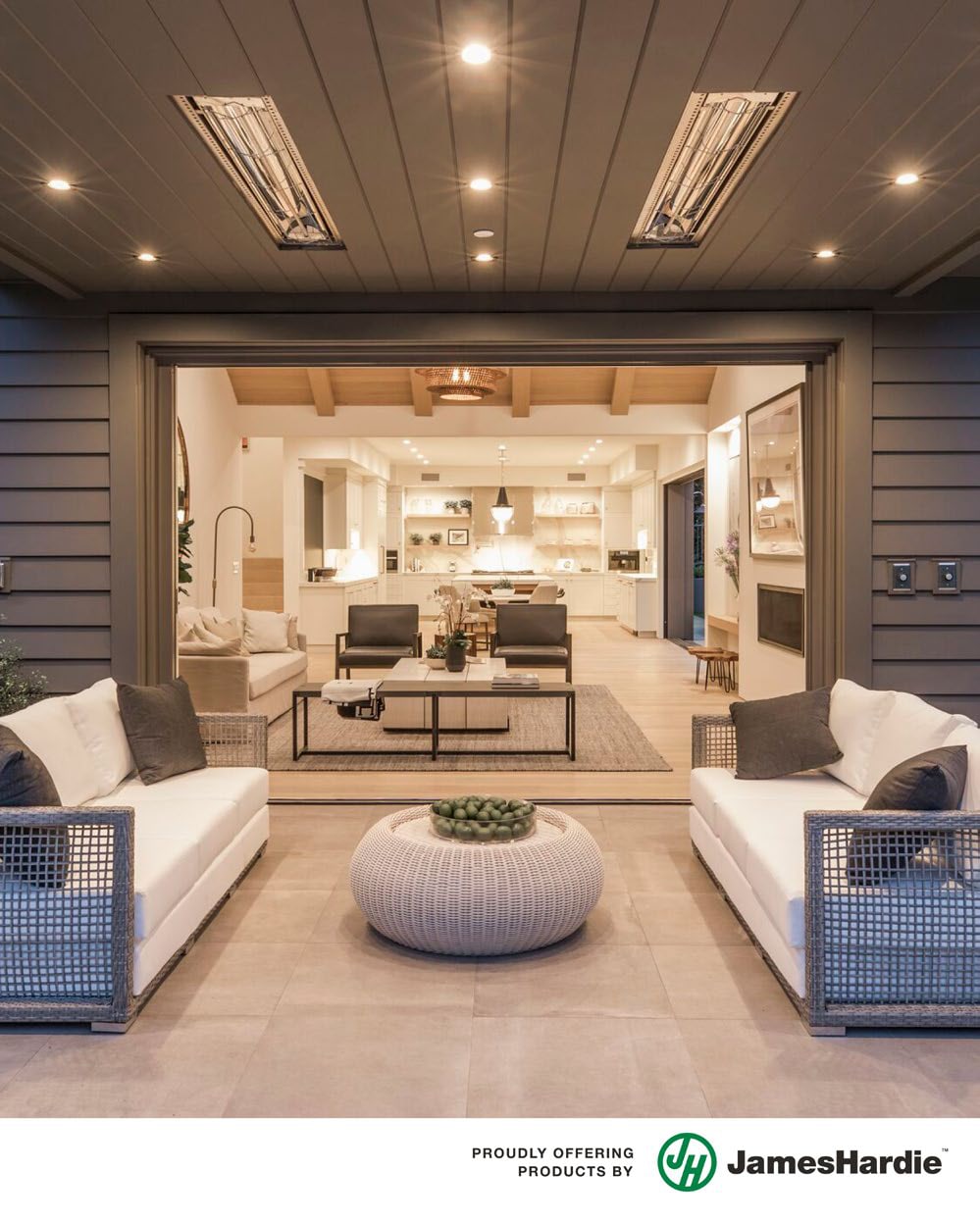
Most James Hardie conversations start and finish with Plank, the lap profile that re-sides the region. But the catalogue's upper shelf, HardieShingle's coastal coursing and Artisan's sculpted mass, exists precisely for the houses where standard lap undersells the architecture, and knowing when those profiles earn their premium is genuinely useful knowledge for character-home owners and anyone building at the street's better end. This guide covers both, as part of our siding guide for BC buildings and a companion to the Plank-versus-Panel basics.
HardieShingle: cedar's look, mineral's rules
Shingle siding is the coast's mother tongue, half the character streets in Vancouver, New Westminster and the North Shore speak it, and HardieShingle exists because so many owners love the language and have retired from cedar's maintenance covenant. The product reproduces shingle coursing in fiber cement: straight-edge panels for crisp, regular lines, staggered-edge for the relaxed hand-laid look, and individual shingles for the details panels cannot turn.
What it gets right is the read: at street distance and even at handshake distance, good HardieShingle work passes as painted cedar coursing, with ColorPlus finishes carrying the colour decision for decades and none of the cupping, splitting or biological appetite that sends real shingle walls into our repair queue. What it costs is real: material above Plank, and labour meaningfully above, small formats mean more handling, more course discipline, more cutting at openings, priced through the same nine factors as any Hardie job with the labour lever pulled harder.
Where it earns the spread: gables, the single highest-value Shingle application, character in exactly the triangle the street looks at; full upper storeys on heritage-language homes; and whole-house shingle on the styles that demand it, where the alternative is either real cedar's upkeep or abandoning the house's character entirely. Where it does not: large plain field walls better served by Plank, and budgets where the gable-only strategy delivers ninety percent of the effect for a fraction of the cost.
Artisan: mass as a design material
Artisan is Hardie's answer to a different question: not "how do we imitate wood" but "what does fiber cement look like with no compromises." The boards are dramatically thicker than standard plank, and thickness changes everything the eye reads: shadow lines deep enough to design with, corners that can be true mitres rather than trim-covered butts, and a wall presence, a solidity, that photographs subtle and reads unmistakable in person.
It is a genuinely architectural product, which means it rewards architectural contexts: modern designs whose whole language is plane and shadow, high-end traditionals where trim and reveal depth carry the style, and the front elevations of homes whose streets expect something. It is also unapologetically premium, material at the catalogue's top, handling labour to match its weight, and detailing that assumes crews who respect the published requirements: fastening specifics, mitre craft, and layout planning, because deep shadow lines advertise course errors that thin lap forgives.
The honest counsel we give: Artisan is rarely a whole-house answer and frequently a brilliant partial one. The street face in Artisan with sides in matched-colour Plank is the standard strategy, the premium spent exactly where presence is perceived, transitions broken at corners where the profile change reads as intention. On view homes in West Vancouver and the North Shore, on signature builds anywhere, that composition delivers the top-shelf read at a budget the whole-house version would triple.
The premium-profile decision, structured
Since both products answer "is it worth it" the same way, here is the structure. Match the profile to the architecture's language: Shingle for coastal-character and heritage vocabularies, Artisan for shadow-and-plane vocabularies, and neither for houses whose language is simple lap, spending on geometry a facade cannot use is the one way to waste these products. Spend by elevation: gables and street faces first, per the mix strategies above; the elevation-map thinking that governs metal budgets governs premium fiber cement identically. Hold the system together: shared ColorPlus colours, compatible HardieTrim, coursing planned across profile transitions, one family, deliberately composed, which is also what keeps future repairs matchable within a stable catalogue. And weight the crew hardest: premium profiles concentrate their value in execution, mitres, course discipline, layout, so the contractor questions matter more here than anywhere in the standard range. A premium profile installed casually is the worst of both worlds: top-shelf money, visible-forever errors.
What the alternatives comparison looks like
Premium Hardie profiles compete less with other Hardie than with other materials' top shelves, and the cross-shopping is worth naming. HardieShingle versus real cedar shingle: geometry honours the tradition, maintenance profiles diverge completely, and the lifespan mathematics favour mineral on every shaded or busy-owner wall; purists with maintenance appetite remain cedar's rightful market. Artisan versus Longboard and premium metal: both deliver architectural presence; metal reads crisp and contemporary, Artisan reads substantial and timeless, and the best modern builds in the region increasingly use both, metal at soffits and features, deep fiber cement on the body. Premium profiles versus premium details: sometimes the same budget buys more architecture as trim, finishing and stone accents over standard Plank than as profile upgrade, a composition question we walk through with elevation drawings at assessment, because the right answer is visual, not doctrinal.
Living with them
The ownership experience is the quiet argument. Both profiles keep fiber cement's routine: annual wash, sealant checks, clearance vigilance, no finish cycles, no pest appetite, and ColorPlus aging measured in decades. Shingle walls skip every autumn ritual their cedar neighbours keep booking; Artisan walls simply sit there being substantial while lesser claddings cycle through their maintenance seasons. Repairs, when life delivers them, follow the standard board-by-board playbook within a catalogue that holds its profiles stable, and the documentation habit, colour codes, spare pieces from the original order, serves premium walls exactly as it serves every other, with more money protected per banked plank.
Detailing notes from the install side
Since execution carries the value, here is what disciplined premium-profile work actually involves, the checkpoints owners can ask about and crews should volunteer. For Shingle: course-line management across elevations, staggered-edge randomness that is planned rather than improvised, real randomness reads wrong, curated randomness reads hand-laid; alignment discipline at openings so coursing meets windows symmetrically; and the same clearance and flashing catechism as all fiber cement, with more edges to hold it at. For Artisan: layout drawn before cutting, because deep shadow lines turn a quarter-inch course drift into a visible diagonal; mitred corners executed by people who have mitred this product before, the detail that separates Artisan crews from crews holding Artisan; fastening per its specific schedule, the thickness changes the rules; and handling logistics that respect the weight, staging, carrying, cutting stations, planned rather than endured. Both profiles reward the stage-photo habit doubly: concealed work documented, and the layout decisions, course maps, corner treatments, recorded for the future-matching file. None of this is beyond a good crew; all of it is beyond a casual one, which is the entire point of asking.
What these projects cost, in structure
Premium-profile pricing follows the nine-factor structure with the levers repositioned, and knowing which ones move keeps quotes legible. Material sits above Plank, Shingle meaningfully, Artisan substantially, and the mix-by-elevation strategy caps it: gables-only Shingle prices as a modest premium on a whole-house job; street-face Artisan prices as a bounded feature. Labour is the bigger mover: small-format coursing and mitre craft are hours, and complexity multiplies them, a chopped-up Shingle elevation with five openings costs disproportionately more than a clean gable triangle. Trim interacts: Artisan's corner options can reduce trim material while increasing craft hours; Shingle's edges want the trim package planned with the coursing. Access is unchanged but less forgiving, premium work on high elevations wants premium staging. And the finish factor tilts further toward factory: ColorPlus on premium profiles protects the exact investment being made, per the colour-longevity math. The honest summary for budgeting: expect the premium to concentrate where you concentrated the profiles, and expect the quote to show it line by line, because a premium-profile bid priced in one number is hiding either the craft or its absence, per the comparison method.
Questions before committing to premium
"Will anyone actually notice?" At the elevations these profiles belong on, yes, and consistently: guests notice entries, buyers notice street faces, and shadow depth reads even when people cannot name what they are seeing. On elevations nobody experiences, honestly, no, which is the entire argument for the mix strategy rather than whole-house premium.
"Can I upgrade one elevation later?" Physically yes, and it happens, but the transitions and colour matching are far cleaner when planned as one project, and staging twice costs more than most of the savings. If the budget is close, phasing by elevation with a documented plan beats improvising in five years.
"Do these profiles need special maintenance?" No, that is much of the point: the routine matches every fiber cement wall, wash, inspect, hold clearances, per the ownership rhythm, with more visual investment protected by the same twenty minutes.
"What if I want the look but not the price?" Standard Plank with an invested trim and detail package delivers real architecture for less, and gable-only premium concentrates the effect where roofs frame it. Both are legitimate, and we quote them beside the full version.
How the premium profiles age
Since these are long-horizon purchases, the ageing story deserves its own section. Both profiles inherit fiber cement's fundamental behaviour, no rot, no insect appetite, no embrittlement, and ColorPlus finishes carrying colour for decades, per the lifespan ranges. What differs is how their geometry ages visually. Shingle's coursing collects more debris in its horizontal lines than flat lap does, particularly under trees, which means the annual wash matters slightly more and shows results slightly more dramatically. Artisan's deep shadow lines stay crisp because the material does not swell or cup, the exact failure that makes thick wood profiles disappoint over decades, and its mitred corners, when properly executed, remain tight rather than opening with seasonal movement.
Both profiles also age well in the resale sense, which is not a small consideration on premium spend: the coursing and shadow depth photograph as quality, they read as intentional design rather than default cladding, and they carry the buyer recognition that fiber cement enjoys in this region. Fifteen years on, a well-installed Shingle gable or Artisan street face still reads as the best-dressed house on the block, which is precisely the return the premium was purchased for.
Deciding, in one paragraph
Premium profiles are worth it when three conditions align: the architecture can use their geometry, the elevations chosen are ones people actually experience, and the crew installing them has done it before. Miss any one and the premium underperforms; hit all three and these walls become the reason people slow down as they pass the house. Everything else, budget, mix strategy, colour, follows from that alignment, and an hour with elevation drawings settles it faster than any amount of catalogue browsing.
Key takeaways
- HardieShingle buys cedar's coastal language without cedar's covenant; Artisan buys mass, shadow and mitred corners as design materials, both keeping fiber cement's maintenance story.
- Premium profiles earn their spread where architecture can use their geometry: Shingle in gables and character upper storeys, Artisan on street and view elevations.
- Mix-by-elevation is the standard budget strategy: premium where presence is perceived, matched Plank elsewhere, transitions at corners.
- Execution concentrates the value: crews fluent in the profiles' specific detailing outrank every other line item.
- Cross-shop honestly, against real cedar, premium metal, and detail-rich standard Plank, and let elevation drawings, not doctrine, decide.
If your house speaks shingle, or your street expects presence, book a free assessment or call 778-358-2885, we will bring the sample boards, both shelves.
A final honest note on restraint: the best premium-profile projects we build often use less of the expensive product than the owner originally imagined, concentrated better. If a quote comes back higher than expected, the productive question is rarely "cheaper product?" and almost always "fewer elevations, better placed?" That conversation usually ends with a happier house and a smaller invoice, which is a combination worth asking for.