James Hardie Siding Cost in BC: The 9 Factors That Set Your Price
What actually drives James Hardie siding cost in Vancouver and the Lower Mainland: wall area, tear-off, rot, trim detail, finish choice, access and more, explained without fake numbers.
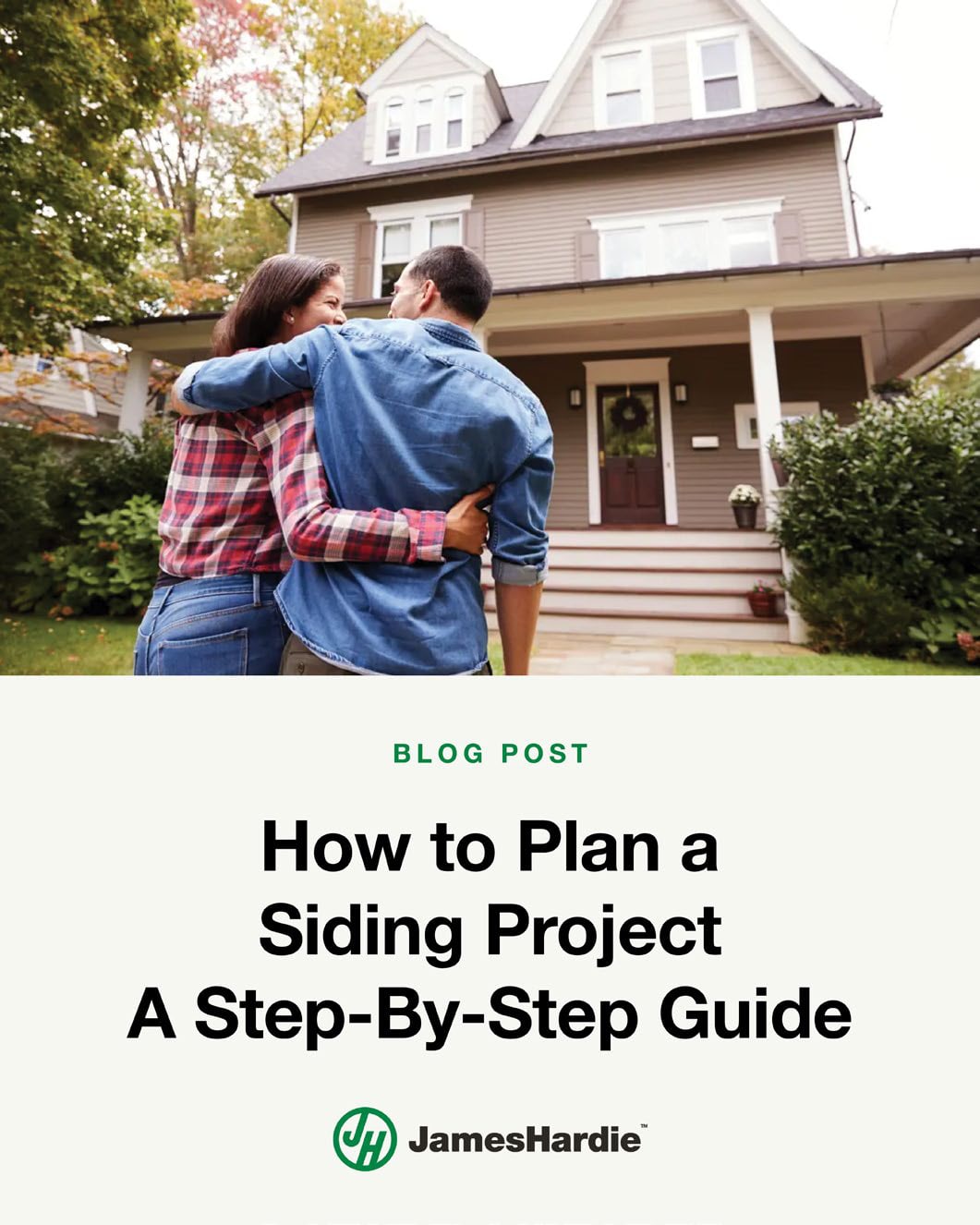
Nobody can tell you what James Hardie siding costs on your home without standing in front of your home, and anyone quoting a tidy per-square-foot number over the phone is guessing at your expense. What we can do is show you exactly which factors move the number, because every legitimate Hardie quote in the Lower Mainland is built from the same nine ingredients. Understand them and you can read any quote like a contractor, including ours.
This post is part of our siding guide for BC buildings, and it pairs with the broader look at what drives siding replacement cost in BC. Here we go deep on the Hardie-specific pieces.
1. Wall area, and the shape of that area
The obvious driver, with an unobvious twist: two homes with identical square footage can price very differently. A simple two-storey box is efficient to clad. A home with gables, bays, dormers, and a dozen inside and outside corners has more cuts, more trim, more flashing and more slow, careful work per square foot of wall. Complexity is a labour multiplier, and on Hardie, labour discipline is exactly what you are buying.
Height matters too. Anything beyond comfortable ladder work brings staging or scaffold, which appears as its own line and buys the safe working platform that quality detailing requires. On the steep lots common in North Vancouver and West Vancouver, access can shift a price more than material choice does.
2. Tear-off and what disposal really costs
The old cladding has to come off, get sorted and get disposed of, and Metro Vancouver transfer stations charge real money by weight and type. Old wood siding with lead-era paint layers, stucco, or multiple archaeology layers of past claddings all cost more to remove than one clean layer of vinyl.
Tear-off is also where your project gets honest: it is the moment the wall's true condition appears. We treat it as an inspection stage, not just demolition, with the foreman walking the stripped wall before anything new goes on, and it is the reason we will not quote installs over existing cladding. What tear-off reveals leads directly to the next factor.
3. The rot contingency
On Lower Mainland homes older than the rainscreen era, some sheathing or framing repair is common once walls open up. No honest contractor can promise you a rot number in advance; what they can do is price transparently when it appears, show you photos before proceeding, and carry a clear unit approach to repairs. Budget emotionally for the possibility. Our repair guide explains how rot repair actually unfolds; the short version is that catching it during a planned re-side is the cheapest moment you will ever fix it.
4. The assembly behind the boards
A Hardie wall in this climate is a system: weather-resistive barrier, rainscreen strapping to create the drainage cavity, flashings at every window, door and penetration, then the cladding. The BC Building Code pushed coastal construction toward drained cavities for good reason, and rainscreen detailing is not an upsell, it is the difference between siding that lasts fifty years and siding that entombs a wet wall.
If your existing assembly is sound and current, this line is small. If your home needs the cavity built, it is a real but worthwhile line. Any Hardie quote that says nothing about the assembly behind the boards deserves a direct question.
5. Profile and product line
Hardie is a family, and position in the family moves price. HardiePlank lap siding is the volume workhorse. HardiePanel vertical with battens prices close to it. HardieShingle costs more in both material and install time, all those small pieces, and Artisan, the thick-butt premium line, sits at the top with its own detailing requirements. Mixing profiles, plank walls with shingle gables, is popular here and prices by area of each. Our comparison of Hardie Plank versus Hardie Panel covers choosing between the big two.
6. Trim, and how much of it your design wants
Trim is the quiet budget line homeowners underestimate. Corners, window and door surrounds, frieze boards, belly bands: on a detailed traditional design, HardieTrim can be a meaningful share of the material bill and a large share of the finish labour. Modern minimal designs with metal reveals spend less here. Neither is wrong; the point is that trim decisions are price decisions, and they get made in the quote stage, on paper, where changing your mind is free.
7. ColorPlus versus site finish
ColorPlus factory finishes carry a modest premium over primed board and repay it over time: baked-on colour, better fade resistance, a separate finish warranty from James Hardie, and no painting scaffold in your yard. Site painting exists for custom colours and certain repair-match situations. On lifetime cost, factory finish usually wins; on colour freedom, site paint does. We walk through both during colour selection.
8. Insulation while the wall is open
Not a Hardie cost, but a Hardie opportunity: with the cladding off, adding continuous exterior insulation costs a fraction of what it would as a standalone project, and CleanBC programs via Better Homes BC may offset envelope upgrades. On older Coquitlam, Burnaby and New Westminster housing stock, this is often the single best upgrade-per-dollar available, and it changes the house every day you live in it. Our exterior insulation service covers the assemblies; whether it belongs in your project is a conversation worth having before the quote is final.
9. Who installs it
The uncomfortable one. Hardie rewards installers who follow the manufacturer's Pacific Northwest practices, correct fasteners and spacing, clearances at roofs and grade, gapped and sealed joints, flashing at every opening, and punishes freelancing. Most fiber cement failures we get called to repair were installation failures on day one. Certified, trained crews cost more per hour and dramatically less per decade. We are a certified James Hardie Alliance contractor, which means factory-backed training and a warranty that stands on spec-correct installation, and our guide to choosing a siding contractor lists the questions that separate crews regardless of whose logo is on the truck.
Why quotes carry expiry dates
One more piece of quote literacy: Hardie pricing is not static, and a quote's expiry date is not a sales tactic. Fiber cement prices move with manufacturer adjustments, freight, and the Canadian dollar, and the labour market for trained installers tightens every spring when the region's re-side season opens. A quote we write in February reflects February's material pricing and a calendar with room in it; the same project priced in June sits in a different market. None of this means rushing a decision you are not ready for. It means that when you are comparing quotes, compare ones written in the same season, and when you are ready to proceed, the quote in your hand is the number, while a quote from last year is a historical document. If a project waits a season, any contractor should be willing to refresh the number and explain what moved, and the explanation should sound like this paragraph, not like improvisation.
Lowering the number without cheating the wall
There are honest ways to bring a Hardie project into budget, and they are not the ones most people reach for first.
Simplify the trim scheme, not the assembly. Trim is discretionary in a way flashing never is. A cleaner trim package can trim real money; a skipped rainscreen only defers a bigger bill.
Choose Plank over premium profiles where the elevation does not earn it. Artisan on the street-facing gable and standard Plank on the sides is a legitimate, common value-engineering move. Nobody experiences the east wall of your house the way they experience the front.
Phase by elevation. The weather wall this year, the rest next year, breaking at corners. The house is protected where it matters soonest and the budget breathes. We cover the phasing logic in our repair-or-replace framework.
Time the project into the shoulder season. Crews book solid May through September. Flexible timing into spring or fall sometimes buys scheduling goodwill, and fiber cement installs fine in cool weather.
Do not cheap out on: the tear-off, the barrier and flashing, the fastening, or the installer. Every one of those savings reappears later with interest, usually as a repair call.
Red flags when comparing Hardie quotes
Because we see the aftermath, here is what a bad Hardie quote looks like from the inside. A price per square foot quoted before anyone measured your walls. No mention of tear-off or disposal. Silence about the weather barrier and rainscreen, the words should appear in any Lower Mainland quote. "Hardie or equivalent," which usually means the equivalent. No named finish, ColorPlus and site paint are different products with different warranties. Vague allowances for rot "to be discussed if found," with no unit pricing, that is where surprise invoices live. And no mention of manufacturer best practices or installer training, on a product whose warranty leans on installation to spec.
None of these makes a contractor a villain. Each one is a question to ask out loud, and the answers separate crews fast. The fuller checklist lives in how to choose a siding contractor in BC.
Timeline, payments and what disruption looks like
A typical single-family Hardie re-side runs one to three weeks on site: a day or two of tear-off and inspection, the assembly work, then cladding and trim at a pace set by the home's complexity and the weather's cooperation. You stay home throughout, the noise is real but daytime, and a good crew leaves the site tidy and the driveway magnet-swept every evening.
Payment structure is worth asking about on any big exterior project. Ours follows the work: a deposit that books materials and dates, progress draws tied to visible milestones, and a holdback until the walkthrough is done and you are satisfied. Be cautious of front-loaded schedules where most of the money moves before most of the work does.
Where Hardie's number sits among the alternatives
Context helps the sticker make sense. Against vinyl, Hardie costs meaningfully more up front and buys mass, fire resistance, colour depth and a longer, flatter maintenance curve, the full trade-off lives in our Hardie versus vinyl comparison. Against wood, Hardie usually costs similar or less once wood's finishing cycle is priced in, and removes the rot-and-repaint treadmill our cedar maintenance guide describes. Against architectural metal, Hardie is generally the more economical face for whole-house cladding, with metal earning its premium on feature elevations and modern designs. Most premium Lower Mainland exteriors we build now mix two of these deliberately, which is itself a cost lever: spend where the house shows, economize where it does not.
How the nine factors become your quote
When we assess a home for Hardie, the quote you receive is those nine factors, measured and priced line by line: area and complexity, tear-off and disposal, assembly work, product and profile, trim package, finish, access, options like insulation, and the labour to do all of it to spec. No allowances hiding in vague language, no "starting at" theatre. Two quotes for the same house can differ for legitimate reasons, different assumptions about the assembly, different trim scope, different crews, and the line items are how you see which differences are real.
A final calibration for your research: when you see American cost-per-square-foot figures for Hardie online, and you will, remember they price a different market, different code requirements, and usually a wall assembly without the rainscreen work our climate demands. Lower Mainland numbers are not US numbers with a currency conversion, and treating them that way sets expectations that no honest local quote can meet. The nine factors above are the local reality.
If you want the real number for your home instead of the internet's guesses, book a free on-site assessment or call 778-358-2885. We measure, we look at what your wall actually needs, and you get the nine factors priced in writing.