James Hardie vs LP SmartSide in BC: Fiber Cement or Engineered Wood?
An installer's honest comparison of James Hardie fiber cement and LP SmartSide engineered wood for BC's coast: moisture behaviour, fire, looks, workability, warranties and where each wins.
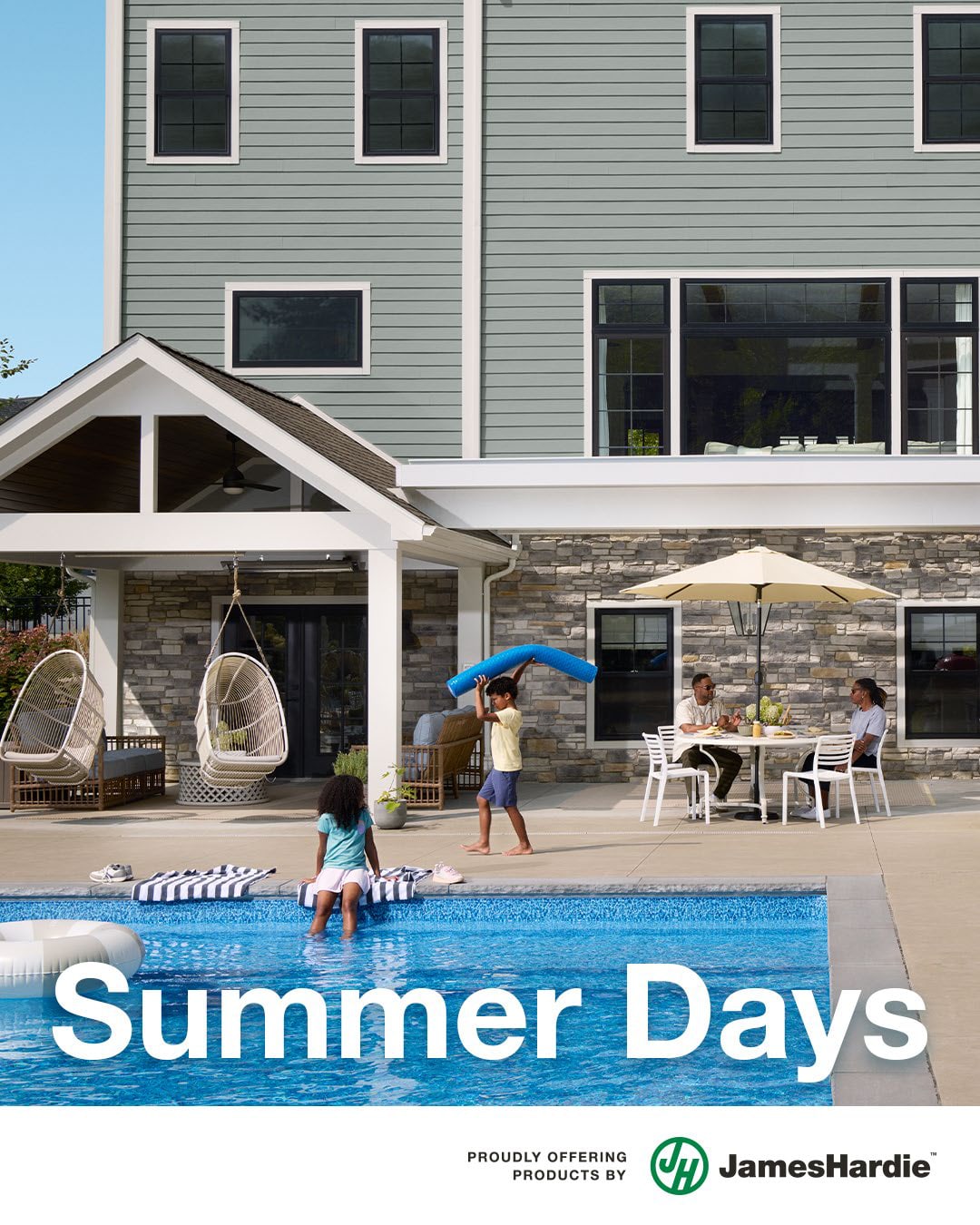
The premium-cladding conversation in BC used to be short: fiber cement, which colour. LP SmartSide's engineered wood has made it a real conversation again, and homeowners now regularly arrive with both names and one question: which one belongs on a coastal wall? We install fiber cement daily as a certified James Hardie contractor, and we have opened enough walls wearing every cladding to compare honestly. Here is the fair fight, as part of our siding guide for BC buildings.
What each product actually is
James Hardie's boards are fiber cement: cement, sand and cellulose fibre pressed into boards, mineral by nature, with texture moulded in and finish applied at the factory (ColorPlus) or on site. Its character flows from the mineral part: mass, dimensional stability, indifference to fungi and flame, and brittleness in handling, the trait behind the installation discipline it demands.
LP SmartSide is engineered wood: wood strands coated in resins and zinc borate, bonded under pressure with a resin-saturated overlay, then primed. Its character flows from the wood part: light, tough, flexible, workable with carpentry tools, warm-looking, and dependent on its treatments and coatings the way wood always depends on its defences.
Both arrive as complete systems, boards, trim, soffit components and published installation manuals, and both manufacturers publish coastal-relevant guidance worth reading before any decision. Neither is "vinyl but better" and neither is a budget product; both are premium claddings with real engineering behind them, sold through the same supply houses, installed by overlapping crews, and specified by the same architects, often on the same street. The differences are personality, and personality is what the coast tests.
Moisture: the coastal question
One framing tool before the details: think of every cladding as carrying a moisture bank account, deposits from wetting, withdrawals from drying, and ask what happens when the account runs a sustained deficit. The two products answer that stress test differently at the material level, and the difference is the heart of this comparison.
Our climate's job description for siding is blunt: stay intact through eight months of wet. Fiber cement's answer is elemental, mineral boards do not rot, and its moisture failures are slow, cosmetic and usually installation-caused: edge swelling where clearances were stolen, never fungal decay. SmartSide's answer is engineered: borate-treated strands, waxes, resins and a tough overlay, and it is a genuinely good answer, dramatically better than the hardboard sidings whose failures haunted an earlier generation, with long warranty coverage to back it.
The honest asymmetry: SmartSide's moisture performance is conditional on its system staying closed, factory edges sealed, field cuts flashed and painted, finish maintained on schedule, joints detailed exactly. Where the system opens, at a neglected cut end, a cracked paint line, chronic splash exposure, wood physics resumes, and our rot-repair casework includes engineered wood alongside every other wood. Fiber cement's performance is less conditional: it forgives finish neglect with fading rather than decay. On the shaded, canopy-dripped walls of the North Shore or Mission, that difference in forgiveness is worth real money; on a breezy, sun-reached Langley elevation, both products live comfortably.
Both, always, sit on the same foundation: the rainscreen and flashing assembly does the actual waterproofing. Neither board is a substitute for it.
Fire: not a tie
This section is short because the physics is, and because pretending otherwise would patronize readers weighing real properties against real risk maps.
Fiber cement is non-combustible; engineered wood is combustible, rated and treated but wood. For most urban lots this is a background fact. It moves to the foreground on: multi-family and mixed-use projects where code and fire separations constrain cladding choices; tight-lot-line walls; and the growing share of BC properties thinking about wildfire, where FireSmart BC guidance pushes ignition-resistant exteriors and insurers have begun asking the same questions. On any project where fire is a listed criterion, insurance renewal letters increasingly make it one, this comparison has a short answer, and it is the mineral one, a theme the FireSmart literature develops fully and this series returns to often.
Looks, and the arguments nobody wins with data
SmartSide partisans point to its deep cedar-grain embossing and its long board lengths, fewer butt joints, cleaner long walls, and they are right. Hardie partisans point to ColorPlus's depth and fade curve, the crisp shadow lines of its heavier boards, and the smooth profiles that own the modern market, and they are right too. Trim systems differ in the same spirit: SmartSide's wood-based trim works like lumber; HardieTrim behaves like the boards. Colour strategy differs more: ColorPlus arrives finished with its own selection discipline, while SmartSide's factory-primed standard invites site colour freedom at site-painting cost, with factory-finish programs available regionally.
Our honest counsel: this axis is preference, and it is settled the same way as colour, physical samples held on your actual wall, in grey light and evening sun, not in a showroom or a comment thread.
Workability, weight and what crews know
SmartSide's popularity with builders is not mysterious: it is light, cuts like lumber without silica dust management, takes fasteners forgivingly, ships long, and moves fast, virtues that show up as somewhat lower installed cost and as fewer handling defects from inexperienced crews. Fiber cement is heavier, dustier, more brittle in motion, and specific about its fastening, tools and cutting practices, which is precisely why crew training became the industry's dividing line and why certification programs exist.
The buyer's translation: SmartSide is somewhat harder to install wrong; Hardie punishes casual crews faster. But a disciplined crew delivers either at spec, and an undisciplined one will eventually fail either, SmartSide through neglected cut-edge and joint details, Hardie through the seven classics. The installer question outranks the material question, here as everywhere in this series, and the interview checklist applies to both products unchanged.
Cost and lifetime math
Upfront, SmartSide typically lands somewhat below Hardie on the same wall, material and labour both contributing, with the gap widening on complex, cut-heavy elevations and narrowing when factory finishes are compared like for like. Lifetime, the ledger shifts with maintenance reality: engineered wood wants its finish renewed on a real schedule and its details kept sealed, a genuine recurring line; ColorPlus stretches repaint horizons dramatically and tolerates neglect with grace. Run both numbers through the structure of our Hardie cost factors guide, the nine levers apply to any premium cladding, and let your ownership horizon decide which column matters: five-year owners weigh the upfront gap; twenty-year owners weigh the maintenance one.
Where each one wins, plainly
Choose Hardie for the wettest and most shaded exposures, for fire-relevant projects, for multi-family and strata work, for smooth modern profiles, for maximum finish longevity, and for owners who want the most forgiveness per decade. Choose SmartSide for deep-grain traditional looks on well-detailed walls, for budget-sensitive premium projects, for impact-prone elevations, hail country in the valley, sports-adjacent walls, where its toughness shines, and where a trusted crew knows the product cold. Either way, insist on the assembly behind, the published details, and the documentation habits this series preaches, because both products are only ever as good as the wall they are installed on.
The multi-family and builder lens
For stratas, developers and GCs the comparison shifts weights. Fire class stops being philosophical: code constraints on combustible cladding, lot-line separations and insurer expectations put fiber cement's non-combustibility on the requirements list for much of the multi-family market, where our new-construction packages live daily, and engineered wood competes mainly on low-rise projects where code leaves the choice open. Maintenance economics scale differently too: a strata budgeting decades of operating costs weighs SmartSide's finish cycles across dozens of buildings, line items that compound, against ColorPlus's long horizons, and depreciation-report arithmetic tends mineral. Speed cuts the other way: SmartSide's install pace and forgiving handling genuinely matter on production schedules, and its long lengths shine on the big simple elevations of townhome rows. Warranty administration rounds out the picture: both programs are solid, and at multi-family scale the documentation discipline, batch records, install-stage photos, spec-conformance evidence, matters more than the program's headline, because claims at scale live and die on records. Our counsel to boards and builders mirrors the homeowner version with the weights moved: fire and lifecycle costs push fiber cement, schedule and upfront push engineered wood, and the crew's fluency in the chosen system outranks the choice.
What ten-year-old walls tell us
Comparisons age better when checked against real walls, so here is what the region's existing installations report. Ten-year fiber cement walls, installed to spec, look essentially new at assessment: ColorPlus surfaces washed back to colour, no movement at joints, the failures we do find tracing to the installation catalogue rather than to time. Ten-year engineered wood walls split by biography: the maintained ones present beautifully, deep grain intact, finishes sound, while walls whose owners skipped the finish cycle or whose crews left cut ends raw show their conditionality at exactly the predicted places, bottom edges, joint lines, high-splash zones. The asymmetry is not product failure versus success; it is forgiveness versus dependence, visible at a decade and compounding after it.
The resale lens reads the same data differently: listing photographs flatten texture, so SmartSide's up-close grain advantage largely disappears at marketing distance, while "James Hardie exterior" has become listing shorthand that realtors deploy because buyers recognize it. Neither fact should decide a wall you plan to live behind for decades; both are worth knowing if your horizon is shorter, per the resale honesty in our colour guide.
The system decision: trim, soffit and accessories
Cladding choices are really system choices, and the families differ at their edges. HardieTrim delivers the same mineral behaviour as its boards, with the full soffit integration that lets one material family close the whole envelope; SmartSide's trim works like premium lumber, warm, workable, and on the same maintenance contract as its siding. Mixed answers are legitimate and common: we build engineered-wood-look walls with metal or fiber-cement trim guarding the highest-splash and highest-heat zones, the material-by-exposure logic this series applies everywhere from cedar decisions to metal accents. What the system view rules out is accessory improvisation, third-party trim of a different personality grafted onto either family at the exact details where personalities matter most.
The five-question shortlist
For readers who want the decision compressed: Is fire on your criteria list, interface property, lot lines, multi-family? Hardie, done. Is your wettest elevation shaded, canopy-dripped or splash-prone? Weight Hardie. Is deep wood grain at conversational distance the look you are buying? Sample SmartSide seriously. Is your maintenance appetite honest, will the finish cycle actually happen? If not, buy forgiveness. And is your crew fluent in the product you prefer? Because the answer to that question, per this whole series, outweighs your answer to the other four.
Key takeaways
- Both are legitimate premium claddings; the differences are personality, mineral stability versus engineered toughness, not quality tiers.
- Moisture forgiveness is the coastal divider: Hardie fails cosmetically when neglected, engineered wood remains wood wherever its system opens.
- Fire is not a tie: non-combustible fiber cement wins every project where fire is a criterion.
- Looks are settled by samples on your wall; cost is settled by parallel quotes and your ownership horizon.
- The installer outranks the material, and the assembly outranks both.
A disclosure that belongs in any comparison this direct: we install fiber cement daily and carry Hardie's certification, and readers should weigh that lens as they weigh any tradesperson's. What keeps the comparison honest is the part certification cannot bias: the walls themselves, opened weekly across the region, whose ten-year evidence we reported above exactly as we find it, and the standing offer to quote both products on your actual elevation so the numbers argue instead of us.
If your shortlist has these two names on it, book a free assessment or call 778-358-2885, we will quote your wall both ways and tell you which way we would go if it were our house.