

Mould, Mildew and Green Streaks on Siding in BC
What the green streaks, black spots and moss on BC siding are, how to clean mould and mildew safely, and when growth points to a deeper moisture problem.
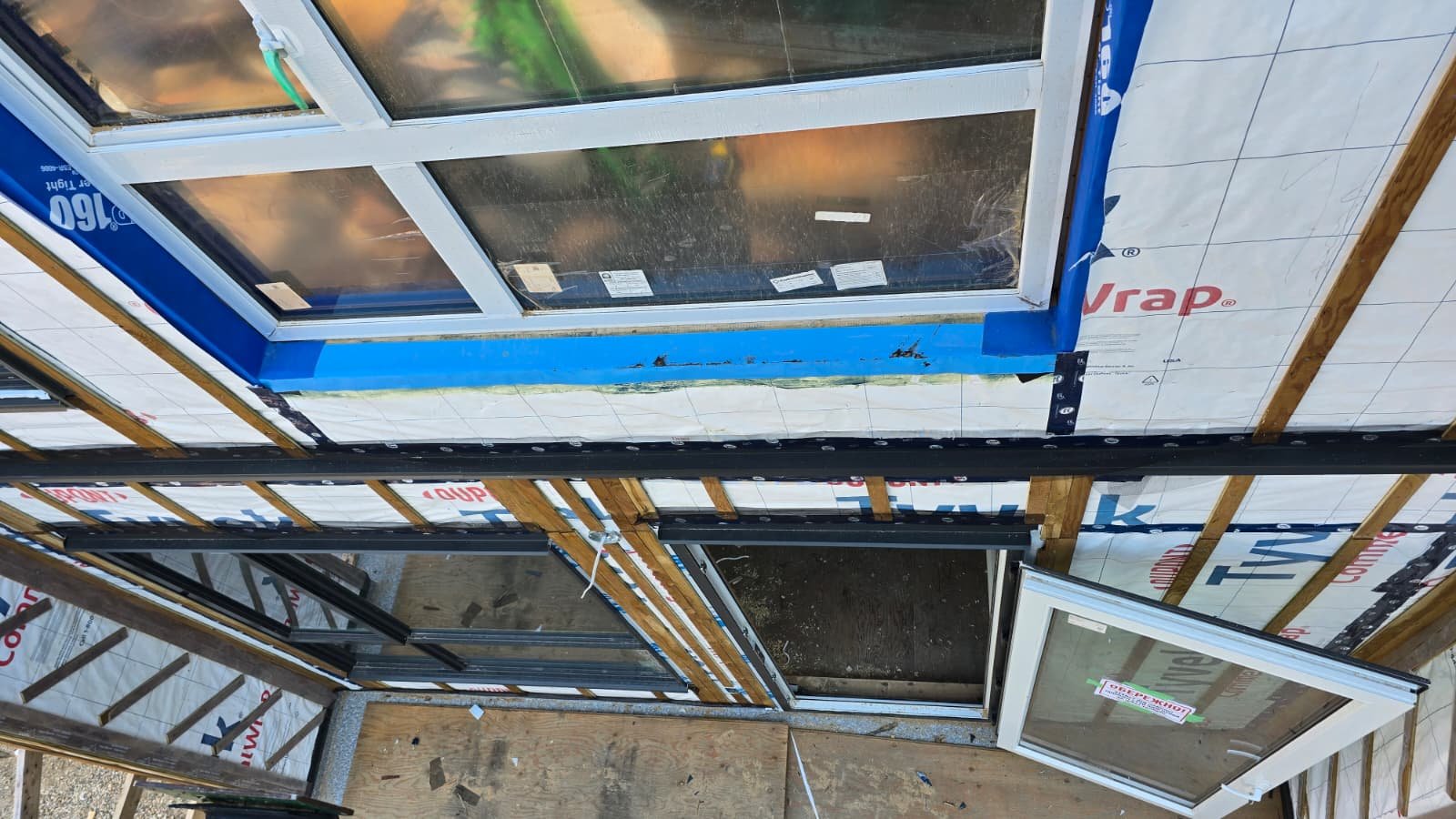
Green streaks on BC siding are usually algae, black or grey speckles are usually mildew, and fuzzy green patches near the ground are moss. All three grow on the surface where the siding stays damp and shaded, and most of the time a gentle wash with a soft brush and a suitable cleaner removes them. The time to worry is when growth is concentrated in one spot, under a window, below a roof edge or behind a gutter, because that pattern often means water is getting into the wall.
Telling those two situations apart is a regular part of the service calls our siding repair crews make across Metro Vancouver and the Fraser Valley. This guide covers what you are looking at, how to clean it without damaging the siding, and how to read growth as a warning sign.
What you are looking at
Green film and streaks
A green film, often running down from horizontal edges, is algae. It lives on the thin layer of dirt and moisture that collects on siding, and it is common on north walls, under trees and near lawns that are watered often.
Black and grey speckles
Small dark spots that look like dirt but come back after a rinse are usually mildew, a surface mould. It likes shade, still air and walls that dry slowly, and often appears first at the top of walls under deep overhangs and in corners where air does not move.
Moss and lichen
Moss grows where a surface stays wet for long periods, usually at the bottom of walls near soil and on trim close to the ground. Lichen forms crusty grey or yellow patches on older surfaces. Both hold moisture against the siding, which matters most on wood and painted surfaces.
Stains that are not growth
Rust streaks from fasteners, dark tannin bleed from cedar, and dirt washed down from an overflowing gutter can all look like mould. A simple check is a drop of diluted household bleach on a small hidden spot. Mildew lightens within a minute or two, while dirt, rust and tannin stains do not.
Why it grows where it grows
Growth follows moisture, shade and still air.
- North and east walls that get little direct sun
- Walls behind shrubs, hedges and fences where air cannot move
- Lower walls near lawns watered by sprinklers
- Below gutters that overflow or leak at seams
- Under decks and balconies that drip after rain
- Near the ground, where splash-back keeps the bottom courses wet
Most of these are simple to fix once you see them. Overflowing gutters often come with soft fascia, which our fascia replacement guide covers.
Cleaning mould and mildew safely
The goal is to remove the growth without damaging the finish or driving water into the wall.
- Pick a cool, overcast day so the cleaner does not dry on the surface before it works.
- Soak nearby plants with plain water and cover anything delicate.
- Apply a cleaner made for exterior siding, or a mild solution your siding manufacturer recommends, working from the bottom up to avoid streaking.
- Let it sit briefly, then scrub gently with a soft brush on an extension pole.
- Rinse from the top down with a garden hose, not a high-pressure blast.
- Rinse the plants again when you are done.
Never mix bleach with ammonia or other cleaners, and keep run-off out of street drains, since storm drains in the Lower Mainland generally flow to creeks rather than to treatment. Follow the care instructions for your cladding. James Hardie, for example, publishes cleaning guidance for its fibre cement that calls for a soft brush and low-pressure rinsing.
Why pressure washing makes it worse
A pressure washer moves growth fast, and it also drives water up behind laps and trim, strips paint, raises wood fibres and etches some finishes. On older walls with no drained gap behind the siding, that water has nowhere to go. We regularly find wet sheathing behind siding that looked fine until someone cleaned it with a pressure washer.
Cedar and wood siding
Wood is more sensitive. Harsh cleaners damage the fibres and the finish, and growth that has worked into the grain may need a dedicated wood cleaner and a fresh coat of stain afterwards. Our guide to cedar siding maintenance on the BC coast covers wood specifically.
When growth is a warning sign
Even growth across a shaded wall is normal here. Certain patterns tell us to look closer.
- A green or black patch under one window and nowhere else on the wall, which often means the window or its sill pan is leaking and keeping that area wet
- Growth directly below the end of a roof edge where it meets a wall, the classic sign of a missing kick-out flashing
- Soft, swollen or flaking siding and trim under the growth
- Paint peeling in the same area, especially along the bottom edges of boards
- Growth that returns within weeks of cleaning, in a spot that gets decent sun
- Musty smells or staining inside on the same wall
Each of these means water is spending too long in one place, and the question is whether it is only on the surface or getting behind it. Before you clean a suspicious patch, photograph it with something for scale and note the date. If it comes back, those photos show a contractor exactly where and how fast, which makes the source much easier to find. Our post on how rain gets behind siding explains how to trace it, and our guide to the flashing details that stop leaks shows what the missing piece usually is.
Mould inside the wall
Mould behind the siding, on the sheathing or framing, is a different problem from surface mildew. It forms when water gets past the cladding and cannot dry out. Older walls without a rainscreen gap, walls with missing flashings and walls where the barrier has failed are the usual suspects.
When we open one of these walls, we usually find dark staining on the back of the siding, blackened or brittle building paper, and sheathing that is stained, swollen or soft under an awl. The fix is not cleaning. We find and correct the water source, remove damaged sheathing and insulation, let the framing dry and replace anything that has lost strength, then rebuild with a correctly lapped barrier and flashings. Our wood siding rot repair guide covers that rebuild.
If mould has reached the interior drywall or insulation over a larger area, it is worth bringing in a qualified remediation contractor for the inside of the wall, while we deal with the exterior source.
How different sidings handle growth
- Vinyl cleans easily, though growth collects along the bottom lip of each panel and in woodgrain embossing.
- Fibre cement with a factory finish cleans well with a soft brush. Painted fibre cement depends on the paint and how well it has been kept up.
- Aluminum and steel resist growth, but soffits and sheltered areas that rain never rinses can build up a film.
- Stucco is porous and textured, so algae and dirt settle into it and are harder to remove without damaging the finish.
- Cedar and other wood can hold growth in the grain, and moisture held against wood for long periods leads to decay.
On any material, smoother surfaces and walls that see sun and moving air stay cleaner longer.
Keeping it from coming back
You cannot stop algae and mildew entirely in this climate, but you can slow them a lot.
- Trim vegetation back from walls so air moves and sun reaches the surface
- Adjust sprinklers so they do not spray the siding
- Keep gutters clean and fix leaks and overflows
- Keep the bottom of the siding clear of soil and mulch
- Wash once or twice a year, ideally in late spring and early fall when dry days follow
Our winter siding checklist is a good time to note which walls are greening up.
Most mould and mildew on BC siding is a cleaning job, and some of it is a symptom of water where it should not be. If cleaning keeps failing in the same spot, or you see soft siding, peeling paint or interior staining nearby, contact Mega Siding for a free quote and an inspection of the wall.