
Metal Cladding Colours and Finishes for BC Buildings
How to choose a metal cladding colour and finish in BC, from paint systems and gloss to woodgrain, dark colours, coastal exposure and matching trim.
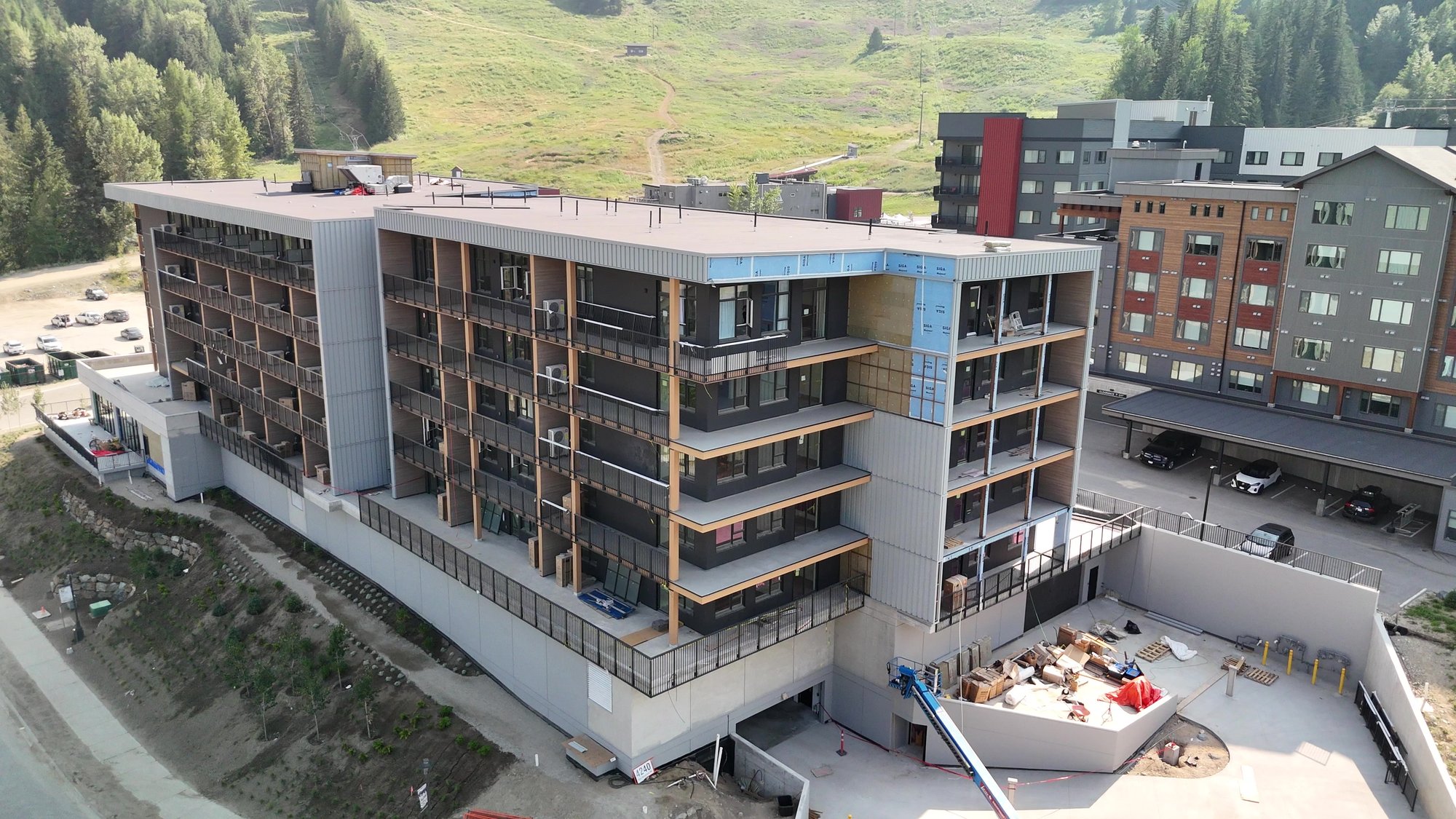
Choosing a metal cladding colour and finish means making three decisions together. The paint system protects the metal and decides how long the colour lasts, the colour and gloss decide how the wall looks, and the trim and flashing colours frame it. A good choice for a BC building looks right in flat winter light, holds its colour on the south and west walls, and suits the exposure of the site.
Most disappointments we see come from picking a colour off a small chip without asking what coating sits behind it. Our metal cladding crews install on homes, multiplexes and commercial buildings across Metro Vancouver and the Fraser Valley, and we bring real samples to site so colours are judged on the wall they will go on.
For the systems themselves, our comparison of metal siding systems covers Longboard, flat panel and corrugated profiles.
What the finish actually is
Factory finished metal is not painted on site. The coil of steel or aluminum is cleaned, pretreated, primed and coated on a continuous line, then baked. That baked coating gives the metal its colour life, and the coating family matters more than the colour name.
Paint system families
Polyester and silicone modified polyester. These are the standard finishes on much residential and agricultural metal. They hold up well in many settings and are the usual starting point on budget-driven work.
PVDF, often sold under names like Kynar 500. This is the premium family for architectural metal. It resists chalking and fade better over long periods, which is why it appears on commercial and institutional specifications.
Printed and sublimated woodgrain finishes. Products like Longboard apply a woodgrain pattern over a coated aluminum base. The colour range is its own world, separate from flat colours.
Each manufacturer publishes its own chalk and fade warranty terms by coating and colour. Ask for that document for the exact colour you are considering, since terms can differ inside one product line.
Steel or aluminum underneath
Steel cladding is metallic coated with zinc or an aluminum zinc alloy before it is painted. Aluminum does not rust, which makes it a common pick near salt water and for soffit and trim. The substrate decides how cut edges and scratches behave over time, which matters most on the coast.
Colours that work in Lower Mainland light
BC light is soft and grey for much of the year. A colour that looks crisp on a sunny sample board can read flat or muddy in November, and our post on choosing James Hardie colours covers why the same effect applies to every cladding here.
Charcoals and near blacks are popular on modern homes and multiplexes. They hide dirt streaks well and pair cleanly with woodgrain accents, but they run hot in summer sun.
Warm greys and taupes sit comfortably next to cedar, stone and greenery, and they are forgiving when a repair panel is needed years later.
Whites and light neutrals look clean and bright, but they show dirt and organic streaking sooner on shaded north walls. Plan for washing.
Strong accent colours on a feature wall or entry can look excellent. Put them where they are easy to see and service, and check any municipal design guidelines first, since some neighbourhoods and commercial zones review exterior colours.
The best habit is to look at a full-size sample on site, on the wall it will go on, in the morning and late afternoon. A chip held indoors at arm's length will mislead you.
Gloss, texture and how metal reads on a wall
Gloss level changes how a colour reads as much as the colour itself. Low gloss and matte finishes reduce glare and hide minor unevenness in the wall, so they read as modern and architectural. Higher gloss finishes look richer up close but show every wave in the panel.
That waviness is called oil canning. It is the slight ripple visible in flat metal surfaces, especially wide flat panels, and it is a characteristic of the material rather than usually a defect. It shows most on dark, glossy colours in low raking light. Narrower profiles, stiffening ribs, embossed textures, heavier gauge and a flat, true substrate all reduce it. If a very flat look matters to you, say so at the design stage so the profile and finish can be chosen with that in mind.
Dark colours and heat
Dark metal gets hot in summer sun, and that drives more expansion and contraction. A properly detailed system handles it with slotted fastening where the manufacturer calls for it and room at the panel ends. On a dark south or west wall we pay closer attention to panel length and movement allowance than we would on a light colour facing north. Fasteners driven tight in the middle of a slot pin the panel, and it buckles on the first hot afternoon.
Dark colours also show chalking sooner, because a light haze on a black wall is easy to see. This is where the premium coating families earn their place.
Coastal exposure and salt air
Buildings close to the ocean, in parts of West Vancouver, White Rock, Delta, Richmond and along Burrard Inlet, take salt-laden wind. Salt speeds up corrosion at cut edges, scratches and fasteners.
- Choose aluminum, or a coating system the manufacturer rates for marine exposure
- Use fasteners compatible with the cladding and suited to coastal conditions, usually stainless steel
- Keep cut edges protected and placed where water drains off rather than sits
- Plan a freshwater rinse on sheltered areas that rain does not wash, such as soffits and under balconies
Many manufacturer warranties have specific terms based on distance from salt water, so read them before choosing.
Dissimilar metals and treated wood
Aluminum and steel cladding must be kept from direct contact with each other, with copper, and with pressure-treated wood. In wet conditions the contact sets up galvanic corrosion, and the copper-based preservatives in treated lumber attack aluminum. On a metal wall this shows up at deck ledgers, guard posts, blocking and old copper flashings. We separate them with a membrane strip or a compatible spacer, and use fasteners matched to the cladding metal.
Woodgrain finishes on aluminum
Woodgrain aluminum has become a standard accent on BC homes and multiplexes, especially on soffits, entry walls and balcony ceilings. It gives the warmth of wood without staining or rot, and it does not burn. A few habits help it look right.
- Pick the woodgrain tone against the main cladding colour in daylight, side by side
- Decide grain direction early, since horizontal and vertical runs read very differently
- Use matched trims and reveals from the same system so joints look intentional
Our Longboard aluminum siding guide covers the product family in detail.
Trim, flashing and fastener colours
A metal wall is only as clean as its trim. Flashings at windows, corners, base of wall and parapets are usually bent from flat sheet in the same coating as the panels. Settle these before ordering.
- Whether flashings match the panel, the window frames or a separate accent colour
- Whether fasteners are exposed, and if so whether the heads are colour-matched
- How transitions between two colours or materials are handled, with a reveal, a trim piece or a change at an inside corner
On larger buildings these choices appear on the drawings and finish schedule. On homes, we walk through them with you so the flashing order matches what you expect to see. Behind the colour, the flashings still have to lap into the weather barrier correctly, which our post on house wrap vs building paper explains.
Ordering, batches and spare panels
Colour can vary slightly between production runs. On a large project we order the full quantity of each colour at once and record the batch, and we suggest keeping a few spare panels and trim lengths for future repairs. Years later, a panel from the original batch is worth far more than a near match from a new run.
Care after installation
- Rinse sheltered areas once or twice a year, more often near the ocean
- Wash with mild soap and a soft brush, never abrasive pads or strong solvents
- Touch up scratches early with matched touch-up paint, sparingly
- Keep vegetation, sprinklers and stored materials off the wall
Those habits keep the coating working and the colour true for the life of the finish.
If you are weighing metal colours or finishes for a building, contact Mega Siding for a free quote and an on-site look at samples.