

Gutters, Fascia and Siding Work as One Water System
Why gutters, fascia, soffit and siding work as one water system on a BC home, the overflow, drip edge and downspout faults that rot walls, and how we fix them.
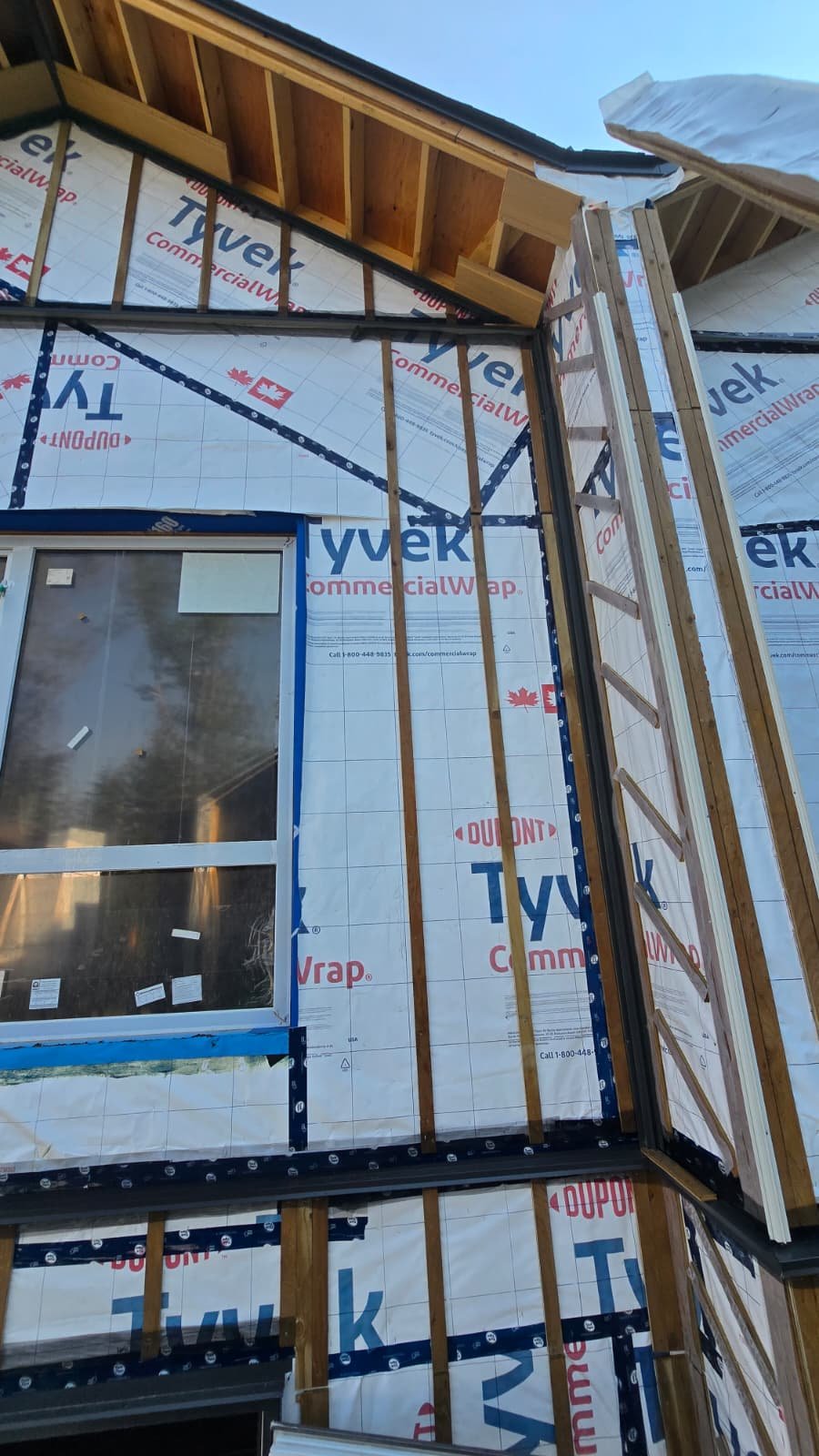
Gutters, fascia, soffit and siding form one water system on a house, and when one part fails, the next part down takes the water it was never built to carry. In the Lower Mainland, where roofs drain for months at a time, a clogged gutter or a missing drip edge can rot fascia, stain soffit and soak the top of a wall within a few seasons. Most roofline damage we repair starts with a simple fault in how water leaves the roof.
Our soffit and fascia crews treat the roof edge, the gutter and the wall below as one job, because replacing rotten fascia without fixing the water path just restarts the clock.
How water is meant to leave the roof
Each part has one job, and each depends on the part above it.
- The drip edge at the roof edge carries water off the shingles and drops it into the gutter, past the face of the fascia.
- The gutter catches it and slopes it toward an outlet.
- The downspout carries it down the wall to a drain or a discharge point away from the house.
- The fascia holds the gutter and closes the rafter ends.
- The soffit closes the underside of the eave and feeds air to the attic.
- The siding sheds what still reaches the wall, with a drained cavity and flashings behind it.
When the top three work, very little water ever reaches the fascia or the wall. When one of them fails, water moves down a layer that was designed for occasional splash, not a steady stream.
The faults we find most often
A drip edge that is missing or too short
On older roofs the drip edge is often missing, or too short to reach past the back of the gutter. Water clings to the shingle edge, runs down the face of the fascia and behind the gutter. The board rots from the top edge down, hidden by the gutter until the hangers lose their grip. A proper drip edge reaches into the gutter, with the back of the gutter tucked under it.
A gutter hung too low or out of slope
If the gutter sits too far below the roof edge, water in heavy rain shoots over the front lip or drops between the gutter and the fascia. If it is level or back sloped, water stands in it and finds every seam and end cap. A gutter should have a steady fall toward each outlet, enough that nothing stands in it the day after rain.
Overflow at inside corners and valleys
Where two roof planes meet in a valley, the water arrives fast and concentrated, often overshooting the gutter at the corner. Inside corners are where we see the worst fascia rot and the darkest streaks on the siding below. A valley splash guard at the corner, and a downspout close to it, usually solves it.
Hangers that have let go
Old spike and ferrule gutters loosen as the spikes back out of the fascia. A full gutter then tips forward, opening a gap behind it where water runs straight down the board. Hidden hangers screwed into sound fascia hold the gutter tight and level.
Downspouts onto a lower roof
An upper downspout that empties onto a lower roof dumps the full flow onto a few shingles beside a wall. That water hits the step flashing and the bottom courses of the upper siding. We extend the downspout across the lower roof into its gutter, and confirm there is a kick-out flashing where the lower roof meets the wall. Our post on the flashing details that stop leaks shows what a kick-out should look like.
Downspouts into old drain tile
Many older Lower Mainland homes have downspouts piped into an underground drain, sometimes clay tile that has cracked or filled with roots. When it backs up, water pools at the base of the wall. A simple test is to run a garden hose into the top of the downspout for a few minutes and watch the connection at the ground. If it overflows there, the drain needs work.
Aluminum wrap over wet fascia
Wrapping wood fascia in prefinished aluminum is a good detail on sound wood with a working drip edge. Wrapped over a wet board with no drip edge, it hides rot for years and holds water against the wood. When we find wrapped fascia, we check the wood behind it with an awl at the corners before trusting it.
What the damage looks like on the wall
Many calls about siding turn out to be gutter problems. These are the signs that point upward.
- Vertical streaks on the siding directly below a gutter seam, end cap or corner.
- Peeling or swollen top courses of siding just under the soffit.
- Soft or flaking fascia, often visible only when the gutter is pulled away.
- Stained or sagging soffit at the corners.
- Moss and soil splash on the bottom courses beside a downspout.
Our article on how rain gets behind siding covers what happens once that water reaches the wall.
Sizing gutters and downspouts for our rain
Some rooflines simply send more water than the gutter can carry. Big roof areas, steep pitches and valleys that dump into one short run overwhelm a standard gutter in a heavy downpour, even when it is clean. The standard residential gutter in BC is an aluminum K-style formed in one continuous length on site, and a larger profile is available for big roofs.
If a gutter overflows during heavy rain with nothing in it, the fix is capacity, not cleaning. That can mean a larger gutter, larger downspouts, an extra outlet partway along a long run, or a downspout at each end instead of one. When we replace fascia, we look at whether the gutter going back on can handle what that side of the roof sends it.
Fixing it from the top down
A lasting repair follows the water.
- Correct the water path. Add or extend drip edge, reset the gutter height and slope, add outlets or splash guards at valleys, extend downspouts, fit kick-out flashings.
- Replace damaged fascia and soffit. Rotted fascia is cut back to sound wood and replaced, and rafter tails are checked while the gutter is down. Our fascia board replacement guide covers that repair step by step. Soffit goes back vented where the attic needs intake, as our post on vented soffit and attic airflow explains.
- Repair the siding below. Swollen or stained courses near the top of the wall come off, the weather barrier behind them is checked, and the sheathing is probed for softness before new siding goes on. That falls under our siding repair service.
- Fix the base of the wall. Downspouts discharge away from the house, soil and mulch are pulled back, and the siding keeps its clearance above grade and hard surfaces.
What a good roofline quote covers
A quote that only says "replace fascia and rehang gutters" leaves out the parts that decide whether the repair lasts. Look for drip edge on every eave, the gutter profile and downspout count, splash guards at valleys, kick-out flashings where they are missing, how soft rafter tails will be handled, and where each downspout will discharge. Ask for photos of the fascia and rafter tails once the gutter is down.
Maintenance that keeps the system working
- Clean gutters at least twice a year, in late fall after the leaves drop and again in spring. Homes under firs and cedars in Coquitlam, Port Moody or the North Shore often need more, since conifers shed needles year round.
- Stand outside during a heavy rain once a season. Overflow points are obvious when water is running.
- Look along each gutter for sags, dripping seams and hangers that have pulled away.
- Check that downspout extensions are back in place after mowing or yard work.
- Look up at the fascia each spring for dark streaks or peeling paint near corners.
Gutter guards cut down on leaves but not on fine needles and roof grit, so guarded gutters still need a look each season.
When to call a contractor instead of a gutter cleaner
A gutter cleaner can clear a blockage. Once the fascia is soft, the soffit is stained or the top courses of siding are swelling, the problem has moved into the building. At that point you want one crew that will fix the water path, replace the fascia and soffit, and open the wall where it is wet, so each layer protects the next.
If water from your roofline is staining or soaking your siding, contact Mega Siding for a free quote.
- gutters
- fascia
- water management
- siding repair
- downspouts