Choosing the Best Siding for Vancouver's Rainy Climate
What is the best siding for Vancouver's rainy climate? Compare fiber cement, vinyl, and other cladding for BC rain, and why the rainscreen behind matters most.
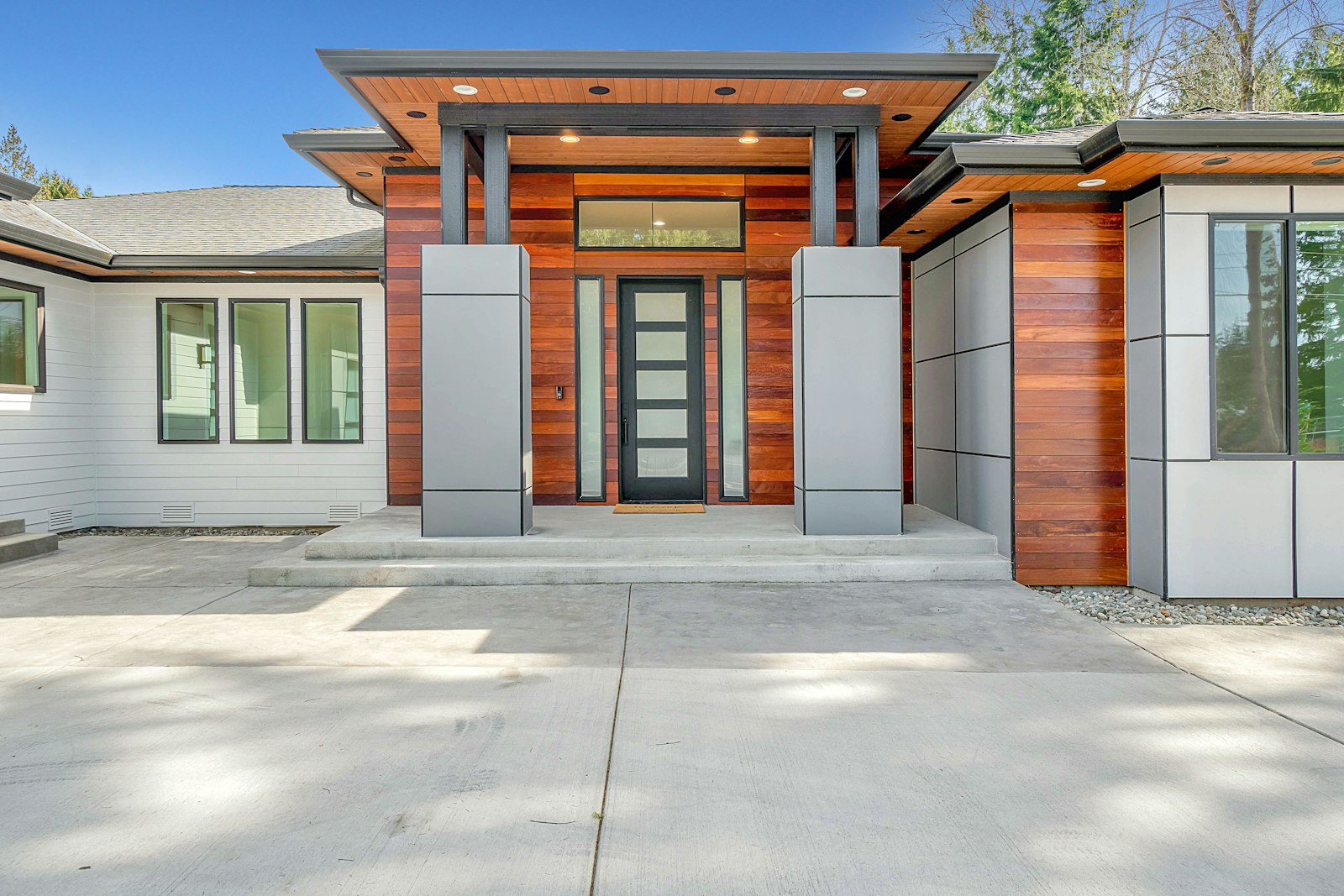
The best siding for Vancouver's rainy climate is the one that pairs a moisture-tolerant cladding, most often fiber cement like James Hardie, with a properly built rainscreen assembly behind it. Vinyl, aluminum systems like Longboard, and engineered wood can all perform well here too. The real differentiator in coastal BC is not the brand on the boxes, it is whether the wall behind the siding can drain and dry. Here is how the options compare, and what actually protects a building through forty inches or more of annual rain.
What makes Vancouver's climate hard on siding?
The Lower Mainland combines long wet winters, wind-driven rain off the ocean, mild temperatures that keep walls damp for months, and enough shade and organic debris to grow moss and algae on any north-facing surface. Materials that do fine in dry climates fail here in specific ways: untreated wood rots, poorly detailed assemblies trap water, and dark surfaces on rain-soaked walls show streaking fast.
So the question "what siding lasts longest in the rain" really has two parts: how the cladding itself handles constant moisture, and how the wall behind it handles the water that inevitably gets past.
How do the main siding options handle rain?
Fiber cement (James Hardie)
Fiber cement is a composite of cement, sand, and cellulose that simply does not rot, swell, or feed insects. It handles wind-driven rain, holds factory finishes for years, and is non-combustible. In coastal BC it has become the default recommendation for owners who want the longest service life with a wood-look finish, and it is the cladding we install most on both houses and multi-family buildings. The trade-offs are weight and install skill: it must be cut, fastened, flashed, and gapped to the manufacturer's specification, so the installer matters as much as the product. For a deeper comparison with vinyl, see our post on James Hardie vs vinyl siding in BC.
Vinyl siding (Kaycan, Gentek, Mitten)
Vinyl gets underestimated. It cannot rot, sheds rain effortlessly, and needs little beyond an occasional wash. Quality Canadian lines from Kaycan, Gentek, and Mitten are engineered for our climate and remain a practical, budget-friendly choice, particularly for multi-family and rental buildings where maintenance cost matters. Its honest limitations are appearance up close, lower impact resistance, and colour range compared to fiber cement.
Aluminum plank systems (Longboard)
Longboard and similar architectural aluminum systems are effectively immune to moisture. They bring a premium woodgrain or matte modern look to soffits, feature walls, and full facades, and they are common on contemporary multi-family projects across Metro Vancouver. Cost positions them as a design-driven choice rather than a whole-house default, and they pair beautifully with fiber cement on mixed facades.
Wood and engineered wood
Real cedar looks like nothing else, and it can work in our climate, but only with disciplined maintenance: stain or seal on a regular cycle, and prompt attention to any failure. Engineered wood products improve on solid wood's stability but still rely on their coatings. For owners who will not commit to the upkeep, fiber cement with a woodgrain texture is usually the wiser call on the coast.
Why the rainscreen behind the siding matters more than the cladding
Here is the point most siding shopping misses: in BC, the cladding is not the waterproof layer. Building practice here assumes wind-driven rain will get past any siding at joints, penetrations, and fastener holes. What protects the structure is the assembly behind it:
- A continuous water-resistive barrier over the sheathing
- Flashings that direct water out at every window, door, and transition
- A ventilated rainscreen cavity, created with strapping, that lets water drain down and air dry the wall
This approach exists because the Lower Mainland learned the hard way. Face-sealed buildings from the 1980s and 1990s, where the cladding alone was expected to keep water out, rotted from the inside and drove the leaky condo crisis. The rainscreen is the fix, and it has been standard practice here for a generation. We explain the full story in our guide to what a rainscreen is and why BC needs it.
The practical consequence: a mid-range siding over a properly detailed rainscreen will protect a building far better than premium siding nailed tight to the wall. When you compare siding quotes, ask what is in the assembly, not just what is on the surface.
Which siding should you choose? A quick decision guide
- You want maximum longevity and a wood look with low maintenance: fiber cement.
- You want the lowest maintenance at the most accessible price: quality vinyl.
- You want a modern architectural statement or durable soffit and feature areas: Longboard aluminum, often mixed with fiber cement.
- You love real wood and will maintain it: cedar, eyes open.
- You manage a multi-family building: fiber cement or vinyl over a full rainscreen, chosen with your budget horizon and bylaws in mind.
Whatever the cladding, insist on manufacturer-specified installation, proper flashings, and a ventilated cavity. Our siding installation service covers all of these systems, and re-siding is also the ideal moment to add continuous exterior insulation while the walls are open. You can browse recent installs on our projects page.
What affects the cost of new siding in Metro Vancouver?
Siding is priced by quote because the drivers vary so much between buildings:
- Wall area, building height, and access
- Cladding material and profile
- Condition of what is under the existing siding
- Rainscreen, membrane, and flashing scope
- Trim, soffit, fascia, and finishing details
- Whether insulation or window work is bundled in
Two houses of the same size can land in very different places once these factors are on the table, which is why we quote from a site visit rather than a square-footage formula.
Frequently asked questions
What siding lasts longest in a rainy climate?
Fiber cement siding like James Hardie is widely regarded as the most durable cladding for wet coastal climates, resisting rot, swelling, and insects while holding paint well. Aluminum systems like Longboard also perform for decades. But any siding only lasts as long as the rainscreen and flashing details behind it.
Does vinyl siding work in Vancouver?
Yes. Modern vinyl siding sheds rain well, never rots, and needs almost no maintenance, which is why it remains popular across Metro Vancouver, especially for multi-family buildings. Its limits are aesthetic range and impact resistance rather than rain performance.
Why does the rainscreen matter more than the siding?
No cladding is perfectly waterproof, so BC building practice assumes some water gets behind the siding. The rainscreen cavity gives that water a path to drain and dry. A building with a proper rainscreen and modest siding will outlast a building with premium siding installed directly over the wall.
Is fiber cement worth it in a coastal climate?
For most owners planning to keep their building long term, yes. Fiber cement does not rot, swell, or burn, handles wind-driven rain well, and carries strong manufacturer warranties. It costs more to install than vinyl, so the decision comes down to budget, appearance goals, and how long you will own the building.
Get a siding recommendation for your building
Mega Siding Exterior Ltd. installs James Hardie, Kaycan, Gentek, Mitten, and Longboard cladding over properly detailed rainscreen assemblies across Coquitlam, the Tri-Cities, Metro Vancouver, and the Fraser Valley. We are BC licensed, insured, WorkSafeBC compliant, and back every install with a written workmanship warranty. Contact us for a site visit and quote, or call 778-358-2885.